
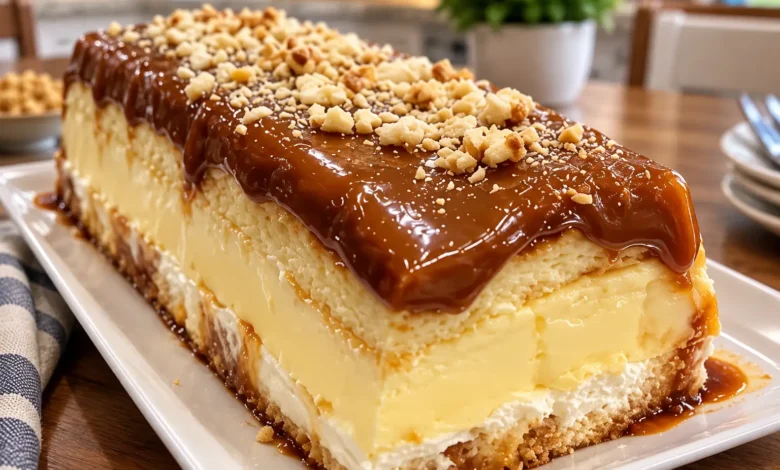
There’s something unforgettable about turning a homemade cake onto a serving plate and watching golden caramel slowly run down the sides. But when you cut the first slice and discover not one, but two beautiful textures inside, that simple dessert suddenly feels extra special.
That’s exactly what you get with Layered Caramel Custard Cake. On top, you have a silky caramel-coated custard that practically melts on your tongue. Underneath sits a soft vanilla cake that catches some of that caramel sauce without losing its tender crumb. Each forkful gives you creamy custard, fluffy cake, and bittersweet caramel together.
It may look like the type of dessert you would only order at a bakery or restaurant, but you can absolutely make it in your own kitchen. The secret is understanding how each layer works, using a gentle water bath, and giving the finished cake enough time to chill.
Whether you’re preparing dessert for Sunday dinner, a birthday, a holiday gathering, or simply because you’re craving something sweet, this Layered Caramel Custard Cake recipe deserves a place in your collection.
What Is Layered Caramel Custard Cake?
Layered Caramel Custard Cake combines two classic desserts in one pan: creamy caramel custard and soft vanilla cake.
Once the dessert is inverted, the caramel becomes a glossy sauce that coats the custard and drips gently over the sides. Beneath the custard is a tender cake layer that provides a completely different texture.
The Three Delicious Layers
What makes this cake memorable is the contrast between its three components:
- Caramel: Deep, golden caramel gives the dessert its signature appearance and slightly bittersweet sweetness.
- Custard: Eggs and milk create a smooth, creamy layer similar to traditional flan.
- Vanilla cake: A tender cake base balances the richness of the custard.
What Does Layered Caramel Custard Cake Taste Like?
Your first bite starts with the rich flavor of caramelized sugar. Then you reach the cool, creamy vanilla custard before finishing with the soft cake underneath.
The caramel prevents the dessert from tasting one-dimensionally sweet. When cooked to a deep amber shade without burning, it develops slightly toasted notes that work beautifully with vanilla.
Why You’ll Love This Layered Caramel Custard Cake Recipe
This recipe gives you an impressive presentation without requiring complicated decorations.
You’ll love it because:
- You get cake and custard in the same dessert.
- The caramel creates its own sauce.
- It can be prepared ahead of time.
- The ingredients are simple and familiar.
- You don’t need elaborate frosting.
- It makes an impressive centerpiece for celebrations.
- Chilling it ahead makes serving easier.
- Every slice shows off the contrasting layers.
It’s particularly convenient when you’re entertaining because most of the work can be completed before your guests arrive.
Layered Caramel Custard Cake Ingredients
For the best result, organize your ingredients into three groups before beginning: caramel, custard, and cake.
Caramel Ingredients
| Ingredient | Amount | Purpose |
|---|---|---|
| Granulated sugar | 1 cup | Creates the caramel topping |
| Water | ¼ cup | Helps the sugar dissolve evenly |
Custard Layer Ingredients
| Ingredient | Amount | Purpose |
|---|---|---|
| Large eggs | 4 | Gives the custard structure |
| Sweetened condensed milk | 1 can (14 oz) | Adds sweetness and richness |
| Evaporated milk | 1 can (12 oz) | Creates a creamy consistency |
| Vanilla extract | 1 teaspoon | Adds vanilla flavor |
Cake Layer Ingredients
| Ingredient | Amount | Purpose |
|---|---|---|
| All-purpose flour | 1½ cups | Creates the cake structure |
| Baking powder | 1½ teaspoons | Helps the cake rise |
| Salt | ¼ teaspoon | Balances the sweetness |
| Unsalted butter | ½ cup | Adds moisture and richness |
| Granulated sugar | ¾ cup | Sweetens the cake |
| Large eggs | 2 | Provides moisture and structure |
| Milk | ½ cup | Keeps the crumb tender |
| Vanilla extract | 1 teaspoon | Adds flavor |
For consistent results, measure the flour carefully. Scooping flour directly with your measuring cup can pack too much into the cup, potentially making your cake heavier than intended.
How to Make Layered Caramel Custard Cake
Although there are several components, you don’t need to rush. Prepare one layer at a time and assemble everything before baking.
Step 1: Prepare the Caramel
Add 1 cup of granulated sugar and ¼ cup water to a medium saucepan.
Place the saucepan over medium heat and allow the sugar to dissolve. Avoid aggressively stirring the mixture once it begins bubbling. Instead, you can gently swirl the saucepan when necessary.
Continue cooking until the sugar changes from clear to golden and finally reaches a medium amber shade.
Carefully pour the caramel into your baking pan and tilt the pan so the bottom is coated.
Caramelized sugar is extremely hot, so handle the pan carefully and never touch the caramel directly.
How to Avoid Burning Your Caramel
Once sugar begins changing color, it can go from golden to burned surprisingly quickly.
Stay close to the stove and remove the caramel from the heat when it develops a rich amber color. If it becomes extremely dark and starts smoking, it may taste bitter.
Don’t worry if your caramel becomes firm after you pour it into the cake pan. That’s normal. It will loosen again as the dessert bakes.
Step 2: Make the Creamy Custard Layer
In a large bowl, combine the eggs, sweetened condensed milk, evaporated milk, and vanilla.
Whisk gently until everything is completely combined.
You’re not trying to whip air into the mixture. Too many bubbles can affect the appearance and texture of your finished custard.
How to Get Extra-Smooth Custard
Pour your custard mixture through a fine-mesh strainer.
This small extra step catches bits of egg that haven’t completely blended and helps give you a smoother finished custard.
Set the mixture aside while you prepare the cake batter.
Step 3: Prepare the Vanilla Cake Batter
In a medium bowl, whisk together the flour, baking powder, and salt.
In another large bowl, beat the softened butter and granulated sugar until creamy. Add the eggs one at a time, followed by the vanilla.
Gradually add the dry ingredients, alternating with the milk.
Mix only until you no longer see streaks of dry flour.
Don’t Overmix Your Cake Batter
Once flour is incorporated into a cake batter, excessive mixing can encourage additional gluten development.
You want enough mixing to create a uniform batter, but you don’t need to keep beating once everything is incorporated.
That helps you maintain the softer texture that works so well against the creamy custard.
Step 4: Assemble the Layers
Pour the prepared custard over the caramel-coated pan.
Next, carefully add the cake batter. Work gently so you don’t unnecessarily disturb the layers.
Don’t panic if the cake looks strange at this stage. The finished layers become much more obvious after baking, cooling, chilling, and flipping the dessert onto a plate.
Why a Water Bath Is Important for Caramel Custard Cake
Custard responds best to gentle heat. That’s why a water bath, also called a bain-marie, is so useful.
Instead of exposing the custard only to the direct dry heat of your oven, the surrounding hot water moderates the baking environment.
This helps the custard cook more evenly and gives you a better chance of achieving that smooth, delicate consistency.
How to Prepare the Water Bath
- Place your filled cake pan inside a larger roasting pan.
- Carefully place both pans on the oven rack.
- Pour hot water into the larger pan.
- Bring the water approximately halfway up the outside of the cake pan.
- Carefully slide the oven rack into position.
- Bake until the dessert is cooked through.
Adding the water after placing the roasting pan on the oven rack can make it easier to avoid carrying a heavy pan filled with hot water across your kitchen.
How Long to Bake Layered Caramel Custard Cake
Bake your Layered Caramel Custard Cake at 350°F (175°C) for approximately 50 to 70 minutes.
The exact baking time can vary depending on your oven, pan depth, and the temperature of your ingredients.
Look for a cake layer that appears set rather than wet in the center. The custard can still have a gentle movement without appearing liquid.
Because this dessert contains an egg-based custard, food safety matters as well. USDA guidance recommends cooking egg dishes to at least 160°F (71.1°C) internally. Check the center with a food thermometer if you’re uncertain.
Avoid simply adding extra baking time because you’re worried about the custard. Overbaking can turn a silky custard into something firmer and more rubbery.
Cooling and Chilling Your Layered Caramel Custard Cake
Once your cake comes out of the oven, patience becomes one of the most important ingredients.
Remove the cake pan carefully from the water bath and place it on a heat-safe surface or cooling rack.
Allow it to cool before transferring it to your refrigerator.
Why You Shouldn’t Unmold It Immediately
Warm custard is much softer than chilled custard. If you flip the dessert too soon, the layers may not hold together cleanly.
Chilling allows:
- The custard to become firmer.
- The layers to stabilize.
- The cake to become easier to slice.
- The caramel flavor to settle into the dessert.
Refrigerate the cake for at least 4 hours, although overnight chilling is an excellent option when you’re making it for a special occasion.
How to Unmold Layered Caramel Custard Cake Without Breaking It
This is the moment you’ve been waiting for.
Once your cake is completely chilled, carefully run a thin knife around the inside edge of the pan.
Place a large serving plate upside down over the cake pan.
Hold the plate firmly against the pan with both hands. In one confident movement, turn everything upside down.
Give the cake a few seconds to release before slowly lifting away the pan.
The caramel that was originally at the bottom should now be on top, creating a beautiful glossy finish.
Tips for the Best Layered Caramel Custard Cake
A few simple habits can make a noticeable difference:
- Watch your caramel carefully. Burned caramel will introduce unpleasant bitterness.
- Strain the custard. This helps produce a smoother consistency.
- Mix the custard gently. You don’t need lots of air bubbles.
- Measure your flour properly. Too much flour can create a dense cake.
- Don’t overmix the cake batter.
- Use a water bath. Gentle baking is particularly important for custard.
- Don’t rush the chilling stage.
- Use a large serving plate. You need room for caramel sauce to collect around the cake.
- Use a clean, sharp knife when slicing. Wiping your knife between slices gives you a neater presentation.
Common Layered Caramel Custard Cake Mistakes
Why Is My Custard Rubbery?
The most common reason is excessive cooking.
Custard depends on eggs for structure, but prolonged high heat can make the proteins tighten too much, producing a firmer texture.
Use the water bath and avoid baking significantly longer than necessary.
Why Does My Custard Have Lots of Bubbles?
You may have incorporated too much air while mixing.
Whisk your custard gently rather than beating it vigorously. Straining it before assembling the dessert can also improve the final appearance.
Why Did My Caramel Turn Bitter?
Your sugar probably cooked too long.
You want a rich amber caramel rather than extremely dark brown sugar. Remove it from the heat before it burns.
Why Did My Cake Stick to the Pan?
The dessert may not have been chilled sufficiently, or you may need to loosen the edges more carefully before flipping.
Run a thin knife around the perimeter before unmolding.
Why Didn’t My Layers Look Right?
Several things can influence the final layers, including:
- Incorrect ingredient measurements
- Wrong pan size
- Overmixed batter
- Incorrect oven temperature
- Insufficient baking
- Changes to ingredient ratios
Following the recipe closely is especially important the first time you make it.
Delicious Layered Caramel Custard Cake Variations
Once you’ve mastered the original recipe, you can experiment with different flavors.
Chocolate Caramel Custard Cake
Add cocoa powder to your cake batter for a chocolate layer beneath the vanilla custard.
Chocolate and caramel naturally complement one another, while the pale custard creates a beautiful visual contrast.
Coconut Caramel Custard Cake
Replace part of the dairy with coconut milk or add a small amount of coconut extract.
You can also garnish the finished cake with toasted coconut immediately before serving.
Coffee Caramel Custard Cake
Add espresso powder to the cake batter for a deeper flavor.
Coffee can balance some of the dessert’s sweetness and works particularly well with the caramel topping.
Orange Vanilla Custard Cake
Add finely grated orange zest to the custard or cake batter.
The fresh citrus aroma gives the rich dessert a brighter finish without overpowering its caramel flavor.
How to Serve Layered Caramel Custard Cake
This dessert is best served chilled.
Cut it into slices and make sure each serving receives some of the caramel sauce collected around the bottom of the plate.
You can serve it as-is or pair it with:
- Fresh strawberries
- Raspberries
- Blueberries
- Lightly whipped cream
- Fresh orange slices
- Coffee
- Espresso
Because the custard is rich and creamy, you don’t need huge portions.
For celebrations, place the entire cake on a decorative serving plate and let your guests see those beautiful layers before slicing.
How to Store Layered Caramel Custard Cake
Because this dessert contains eggs and dairy, keep it refrigerated rather than leaving it on the counter for extended periods.
Cover the cake tightly or transfer slices into an airtight container.
USDA guidance says cooked egg dishes should generally be refrigerated and used within 3 to 4 days. Perishable foods also shouldn’t remain at room temperature for more than two hours under normal conditions.
Can You Make It Ahead?
Absolutely. In fact, Layered Caramel Custard Cake is an excellent make-ahead dessert.
Prepare it the evening before your gathering, refrigerate it overnight, and unmold it the following day.
That gives the custard plenty of time to become firm enough for attractive slices.
Layered Caramel Custard Cake Recipe at a Glance
| Information | Details |
|---|---|
| Prep Time | About 25 minutes |
| Bake Time | 50–70 minutes |
| Chilling Time | At least 4 hours |
| Servings | 10–12 |
| Oven Temperature | 350°F (175°C) |
| Main Flavor | Caramel and vanilla |
| Difficulty | Intermediate |
Frequently Asked Questions About Layered Caramel Custard Cake
What is Layered Caramel Custard Cake?
Layered Caramel Custard Cake is a dessert combining caramelized sugar, creamy baked custard, and a soft cake layer. After chilling, the cake is inverted so the caramel becomes the topping.
Why does Layered Caramel Custard Cake need a water bath?
The hot-water bath provides gentler, more even heat around the custard. This helps you achieve a smoother consistency and reduces the chance of the edges cooking much faster than the center.
Can I make Layered Caramel Custard Cake the night before?
Yes. Making it the night before is actually very convenient.
The additional chilling time helps the custard firm up and makes the cake easier to unmold and slice.
How do I know when Layered Caramel Custard Cake is done?
The cake portion should appear set and the custard shouldn’t look liquid in the center. For food safety, USDA guidance calls for egg dishes to reach 160°F (71.1°C).
Why did my caramel harden?
Caramel can harden quickly when it comes into contact with a cooler baking pan.
That’s normal. During baking, heat and moisture help loosen the caramel again, creating the sauce you’ll see when you invert the cake.
How long should Layered Caramel Custard Cake chill?
Give it at least four hours in the refrigerator. For the easiest unmolding and cleanest presentation, you can chill it overnight.
Can I make Layered Caramel Custard Cake without condensed milk?
You can find custard formulas that don’t use condensed milk, but don’t simply remove it from this recipe without adjusting the other ingredients.
Condensed milk contributes sweetness, liquid, and richness, so removing it changes the balance of the custard.
Can I freeze Layered Caramel Custard Cake?
You technically can freeze many cooked desserts, but custard texture can change after freezing and thawing. For the best creamy consistency, refrigeration is preferable when you plan to eat the cake within a few days.
Conclusion
A beautiful dessert doesn’t always need layers of frosting, piping bags, or complicated decorations. Layered Caramel Custard Cake creates its own dramatic presentation with nothing more than golden caramel, creamy custard, and tender vanilla cake.
The key is giving each step the attention it deserves. Cook your caramel until amber without burning it, mix your custard gently, avoid overworking your cake batter, and don’t skip the water bath. Most importantly, give your finished dessert enough time to chill before you attempt the big flip.
Once you lift that pan and see the glossy caramel running over the smooth custard, all that patience feels worthwhile.
Serve it cold for Sunday dinner, holidays, birthdays, potlucks, or whenever you’re craving a dessert that’s a little different from an ordinary cake.
Save this Layered Caramel Custard Cake recipe so you can come back to it later. If you make it, leave a comment and share how yours turned out. And if someone in your family loves caramel or creamy custard desserts, send this recipe their way—you may have just found their new favorite dessert.
Layered Caramel Custard Cake






 Want an easier way to get my recipes? ❤️