
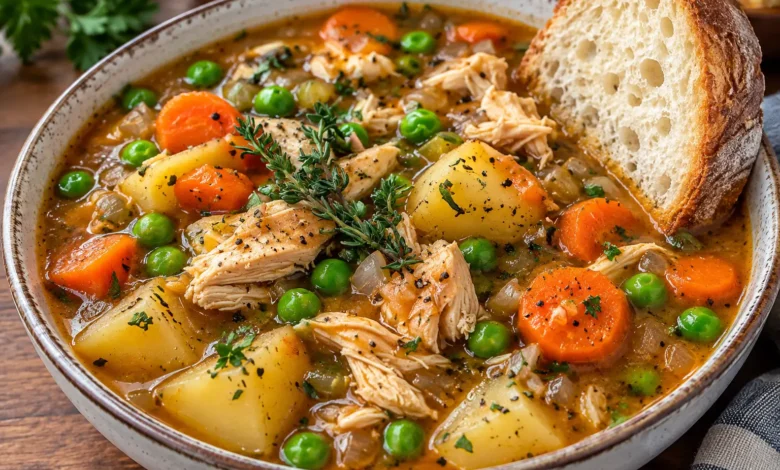
There are evenings when you don’t want anything fancy—you simply want a warm dinner that makes the kitchen smell inviting and leaves everyone at the table satisfied. That’s exactly when Chicken and Vegetable Stew earns its place on your menu.
This hearty stew brings tender pieces of chicken together with potatoes, carrots, celery, green beans, and peas in a savory herb-seasoned broth. Everything cooks in one pot, allowing the vegetables to absorb the chicken broth while the herbs and aromatics create layers of comforting flavor.
You can serve this Chicken and Vegetable Stew for a weeknight family dinner, make a large batch for meal prep, or pull out the recipe when cooler weather has you craving something warm and filling. Better yet, you can easily adjust the vegetables according to what you already have in your refrigerator.
Why You’ll Love This Chicken and Vegetable Stew
A good stew should be hearty without requiring an entire afternoon in the kitchen. This recipe gives you plenty of homemade flavor while keeping the preparation straightforward.
A Hearty Dinner Made with Simple Ingredients
Most of the ingredients are familiar staples you may already keep on hand. Chicken provides the protein, while potatoes, carrots, celery, peas, and green beans turn the pot into a substantial meal.
You’ll also build flavor with simple ingredients such as garlic, onion, tomato paste, chicken broth, thyme, and rosemary.
There’s no need for complicated cooking techniques. A little browning, sautéing, and simmering are all you need.
An Easy One-Pot Chicken Stew
Because the entire meal comes together in one large pot or Dutch oven, cleanup stays manageable.
This recipe works especially well when you want:
- A cozy family dinner
- A one-pot weeknight meal
- A make-ahead lunch
- An easy cold-weather recipe
- A way to use extra vegetables
- A comforting meal that reheats well
You can even prepare your vegetables earlier in the day so that dinner comes together faster.
Chicken and Vegetable Stew Ingredients
One reason homemade Chicken and Vegetable Stew is so adaptable is that you don’t need an unusual ingredient list. The basic recipe uses chicken, broth, sturdy vegetables, aromatics, and herbs.
| Ingredient | Amount | Purpose |
|---|---|---|
| Boneless skinless chicken thighs or breasts | 2 lbs | Provides tender, hearty protein |
| Olive oil | 2 tbsp | Used for browning |
| Yellow onion | 1 medium | Creates the savory base |
| Garlic | 4 cloves | Adds deeper flavor |
| Carrots | 3 | Adds sweetness and texture |
| Celery | 3 stalks | Adds classic stew flavor |
| Potatoes | 1 lb | Makes the stew hearty |
| Chicken broth | 4 cups | Creates the broth |
| Tomato paste | 2 tbsp | Adds richness and depth |
| Frozen peas | 1 cup | Adds sweetness and color |
| Green beans | 1 cup | Adds texture and vegetables |
| Dried thyme | 1 tsp | Adds earthy herbal notes |
| Dried rosemary | ½ tsp | Adds savory aroma |
| Bay leaf | 1 | Flavors the broth |
| Salt | To taste | Enhances flavor |
| Black pepper | To taste | Adds seasoning |
| Cornstarch or flour | Optional | Thickens the broth |
| Fresh parsley | 2 tbsp | Adds a fresh finish |
Best Chicken for Stew
You can prepare this recipe with either chicken thighs or chicken breasts.
Boneless, skinless chicken thighs are particularly forgiving because they tend to remain juicy during simmering. They also contribute a richer chicken flavor to the broth.
Chicken breast is a good choice when you prefer leaner pieces of meat. Just watch the cooking carefully because breast meat can become dry when cooked much longer than necessary.
Whichever cut you choose, chicken should reach an internal temperature of 165°F (74°C) as measured with a food thermometer.
Best Vegetables for Chicken Stew
Carrots, potatoes, celery, green beans, and peas create a classic combination, but you aren’t limited to those choices.
Depending on the season and what you have available, you can also try:
- Corn
- Mushrooms
- Sweet potatoes
- Zucchini
- Parsnips
- Bell peppers
The key is adding vegetables according to how quickly they cook. Potatoes and carrots can simmer for longer, while peas and zucchini should generally go into the pot closer to the end.
How to Make Chicken and Vegetable Stew
The best Chicken and Vegetable Stew develops its flavor gradually. Instead of putting everything into the pot at once, you’ll brown the chicken and sauté the aromatics before adding your broth.
Step 1: Prepare the Chicken and Vegetables
Start by cutting your chicken into bite-sized pieces. Pat it dry and season with salt and black pepper.
Peel and chop the carrots and potatoes, slice the celery, dice your onion, and mince the garlic.
Try to keep your potato and chicken pieces relatively similar in size. Consistent pieces cook more evenly and make each spoonful easier to eat.
Step 2: Brown the Chicken
Heat olive oil in a large Dutch oven or heavy-bottomed pot over medium-high heat.
Add your chicken without overcrowding the pan. If necessary, brown it in two batches.
Cook until the outside develops some golden color. The chicken doesn’t have to cook completely at this stage because it will finish cooking in the broth.
Transfer it to a plate.
Step 3: Build the Flavor Base
Reduce the heat slightly and add the diced onion, carrots, and celery.
Cook for several minutes until the onion begins to soften. Add the garlic and cook briefly until fragrant.
Stir in the tomato paste, thyme, and rosemary.
Allowing the tomato paste to cook briefly before adding liquid helps soften its raw tomato flavor and gives the broth a deeper taste.
Step 4: Add the Broth and Vegetables
Return the browned chicken to your pot.
Add:
- Chicken broth
- Potatoes
- Bay leaf
- Salt and black pepper as needed
Bring everything to a gentle boil before reducing the heat to a steady simmer.
Cover partially and cook until the potatoes and carrots are tender and the chicken is completely cooked.
For food safety, USDA guidance recommends cooking poultry to a minimum internal temperature of 165°F. Use a food thermometer rather than relying only on the chicken’s appearance.
Step 5: Add the Quick-Cooking Vegetables
Once the potatoes are almost tender, stir in your green beans and peas.
Adding these vegetables toward the end helps them maintain better color and texture instead of becoming overly soft.
Continue simmering until the vegetables reach your preferred tenderness.
Remove the bay leaf before serving.
How to Thicken Chicken and Vegetable Stew
You can keep your stew relatively brothy or turn it into a thicker, gravy-like meal.
Use a Cornstarch Slurry
Combine about 1 tablespoon of cornstarch with 1–2 tablespoons of cold water. Stir until completely smooth, then gradually add it to the simmering stew.
Give the broth a few minutes to thicken before deciding whether you need more.
Mash Some of the Potatoes
For a more rustic approach, remove a few cooked potato pieces, mash them with a fork, and stir them back into the pot.
The starch from the potatoes naturally thickens the broth without adding flour or cornstarch.
Let the Stew Simmer Uncovered
If your stew is only slightly thinner than you want, remove the lid and let it gently simmer for a little longer. Some liquid will evaporate, concentrating the broth at the same time.
How to Make Chicken and Vegetable Stew Taste Better
Simple recipes depend heavily on good cooking technique.
Brown Your Chicken First
Skipping the browning step may save a few minutes, but you’ll miss some of the deeper savory flavor created when the chicken develops color.
Season in Layers
Don’t wait until the final minute to add all your seasoning.
Season your chicken first, season the vegetables lightly as they cook, and then taste the finished broth before serving.
This approach gives you more control over the final flavor.
Use Herbs Wisely
Thyme and rosemary work beautifully with chicken, potatoes, and carrots.
Dried herbs are particularly useful during simmering because they have time to release their flavor into the broth. Fresh parsley works better at the end, adding a brighter finish.
Chicken and Vegetable Stew Variations
Once you understand the basic recipe, you can change it easily.
Creamy Chicken and Vegetable Stew
For a richer variation, stir some heavy cream or half-and-half into the stew toward the end of cooking.
Keep the heat gentle once dairy has been added.
You can also add a small amount of softened cream cheese for a thicker, creamier consistency.
Slow Cooker Chicken and Vegetable Stew
You can adapt the recipe for your slow cooker by adding the chicken, aromatics, sturdy vegetables, seasonings, and broth to your Crock-Pot.
Quick-cooking vegetables such as peas should be added closer to serving time.
When using a slow cooker, make sure your chicken is properly thawed first rather than starting with frozen poultry.
Spicy Chicken Vegetable Stew
If you enjoy some heat, add:
- Crushed red pepper flakes
- Cayenne pepper
- Chopped jalapeño
- Hot paprika
- Extra black pepper
Start with a small amount and increase it after tasting.
What to Serve with Chicken and Vegetable Stew
This stew can easily stand alone as a complete dinner, but adding bread makes that flavorful broth even more enjoyable.
Try serving it with:
- Crusty French bread
- Homemade dinner rolls
- Garlic bread
- Cornbread
- Buttermilk biscuits
- Simple green salad
You can also spoon your stew over cooked white or brown rice. This is especially useful when you’re feeding a larger family and want to stretch the meal further.
Common Chicken Stew Mistakes to Avoid
Even a simple stew can go wrong when everything is cooked at the same time or temperature.
Don’t cut your vegetables too small. Small potato and carrot pieces can break apart before the chicken has finished cooking.
Don’t aggressively boil the stew. A steady simmer gives you better control and helps keep your ingredients intact.
Don’t add peas too soon. Frozen peas need very little cooking time.
Don’t overcrowd your pan when browning chicken. Too much chicken in the pot traps steam and makes browning difficult.
Don’t add too much thickener immediately. Cornstarch continues thickening as the mixture heats, so add a little, wait, and then decide whether you need more.
How to Store and Reheat Chicken and Vegetable Stew
Chicken and Vegetable Stew is an excellent meal-prep option because the leftovers are easy to portion and reheat.
Refrigerating Leftover Chicken Stew
Transfer leftovers into shallow airtight containers and refrigerate them promptly.
Cooked leftovers should generally be refrigerated within two hours and used within 3 to 4 days.
Can You Freeze Chicken and Vegetable Stew?
Yes. Let your stew cool appropriately before portioning it into freezer-safe containers.
Leave a little space at the top of each container because liquids expand as they freeze.
Keep in mind that potatoes sometimes become softer or slightly grainy after freezing and reheating. The flavor can still be excellent, but the texture may change.
Freezing individual portions makes it easier to thaw only what you need.
How to Reheat Chicken Stew
You can reheat your stew gently in a saucepan over medium heat, stirring occasionally.
If the broth has thickened significantly in the refrigerator, add a splash of chicken broth or water.
You can also microwave individual portions in a microwave-safe container.
USDA guidance recommends reheating leftovers to 165°F.
Tips for the Best Chicken and Vegetable Stew
Keep these simple tips in mind whenever you make your next batch:
- Brown your chicken before adding the broth.
- Cut potatoes and carrots into consistent pieces.
- Choose low-sodium chicken broth when you want greater control over seasoning.
- Add quick-cooking vegetables toward the end.
- Keep the stew at a gentle simmer.
- Taste the broth before adding extra salt.
- Don’t overcook chicken breast.
- Use fresh parsley as a finishing touch.
- Add thickener gradually.
- Let the stew sit for a few minutes before serving so the flavors can settle together.
Frequently Asked Questions About Chicken and Vegetable Stew
What vegetables are best in Chicken and Vegetable Stew?
Potatoes, carrots, celery, green beans, and peas are excellent choices because they provide different textures and flavors. You can also add mushrooms, corn, parsnips, zucchini, or sweet potatoes.
How do you thicken Chicken and Vegetable Stew?
You can thicken your stew with a cornstarch slurry, flour-based thickener, or mashed cooked potatoes. You can also simmer the stew uncovered to reduce some of the liquid.
Can you make Chicken and Vegetable Stew in a slow cooker?
Yes. Chicken and Vegetable Stew adapts well to a slow cooker. Place the chicken, sturdy vegetables, broth, aromatics, and seasonings into the slow cooker, then add delicate vegetables toward the end of cooking.
Can I use chicken breast instead of chicken thighs?
Absolutely. Both cuts work well. Chicken thighs tend to remain juicy during longer cooking, while chicken breasts provide a leaner option and should be watched more carefully to prevent overcooking.
Can I use frozen vegetables?
Yes. Frozen peas, corn, green beans, and mixed vegetables can make this recipe even easier. Most frozen vegetables can be added later in the cooking process because they usually need less time than raw potatoes and carrots.
Why is my Chicken and Vegetable Stew watery?
You may have added more broth than necessary, or your vegetables may have released additional water. Simmer the stew uncovered to reduce the liquid or use a small cornstarch slurry to thicken it.
Can Chicken and Vegetable Stew be made ahead of time?
Yes. In fact, this is a convenient recipe to prepare ahead for busy days. Store it properly in the refrigerator and reheat only the amount you need.
How do I keep the vegetables from becoming mushy?
Pay attention to cooking times. Add sturdy vegetables such as potatoes and carrots earlier, then add peas, green beans, zucchini, and other quick-cooking vegetables later.
Conclusion: A Chicken and Vegetable Stew Worth Making Again
A warm pot of Chicken and Vegetable Stew proves that comforting food doesn’t need to be complicated. With tender chicken, hearty potatoes, colorful vegetables, aromatic herbs, and savory broth, you get a complete dinner from ingredients you can easily customize.
You can keep the broth light, thicken it until it’s rich and hearty, make it creamy, add extra vegetables, or give it a little heat. Serve your stew with warm bread on a chilly evening, prepare it for a Sunday family dinner, or portion the leftovers for easy lunches during the week.
Most importantly, make the recipe fit your kitchen. If you have carrots but no green beans, add extra carrots. If your family loves corn, toss some in. A homemade stew is supposed to be flexible.
Ready to make it? Save this Chicken and Vegetable Stew recipe for your next cozy dinner, and after you try it, leave a comment and share which vegetables you added. Your variation might inspire someone else’s next family meal!

Chicken and Vegetable Stew






 Want an easier way to get my recipes? ❤️