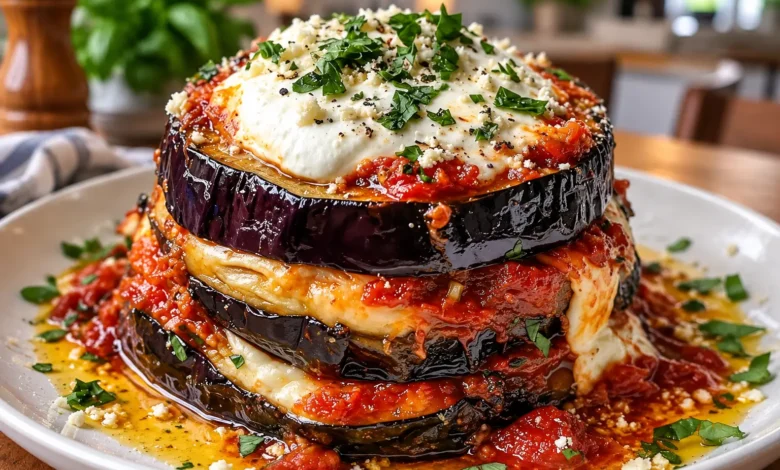
There are certain dinners that make you want to slow down and enjoy what’s on your plate. Burrata Eggplant Parmigiana with Caramelized Onions & Parmesan Cream is one of those recipes. It takes the comforting layers you expect from eggplant Parmigiana and gives them a richer, creamier twist that feels special without being overly complicated.
You get tender roasted eggplant layered with tomato sauce, sweet caramelized onions, melted cheese, and a silky Parmesan cream. Then, just when you think it couldn’t get any better, fresh burrata is torn over the warm Parmigiana. The heat gently softens the cheese, leaving you with that wonderfully creamy center in every serving.
This is the kind of vegetarian dinner you can serve on a quiet Sunday evening, bring to the table for a family gathering, or prepare when you want something impressive for guests.
Better yet, most of the components can be prepared separately, which makes assembling the final dish surprisingly manageable.
What Is Burrata Eggplant Parmigiana with Caramelized Onions & Parmesan Cream?
Classic eggplant Parmigiana is built around layers of eggplant, tomato sauce, cheese, and Parmesan. Depending on the recipe and regional style, the eggplant may be fried, breaded, grilled, or roasted.
This version keeps that comforting foundation but adds two elements that dramatically change the finished dish: caramelized onions and Parmesan cream.
The onions cook slowly until soft, golden, and naturally sweet. That sweetness balances the acidity of the tomato sauce and the salty flavor of the cheeses.
Parmesan cream brings another dimension. Instead of relying only on melted cheese between the layers, you get a silky sauce that spreads throughout the casserole.
Finally, burrata gives the finished Parmigiana its luxurious touch. Rather than cooking the burrata for the entire baking time, you can add it toward the end or immediately after baking so its creamy center remains soft.
Why Burrata Works So Well with Eggplant
Eggplant has a mild flavor and tender texture that readily takes on the flavors surrounding it. That makes it a natural partner for rich cheeses.
Burrata is particularly good here because its creamy interior provides contrast to the roasted eggplant and tangy tomato sauce. When you tear the burrata over the hot casserole, it gently softens without disappearing completely into the dish.
The result is a combination of warm tomato sauce, tender eggplant, savory Parmesan, sweet onions, and cool pockets of creamy burrata.
Ingredients for Burrata Eggplant Parmigiana
You can make this recipe more manageable by dividing your ingredients into four groups: eggplant, caramelized onions, tomato sauce, and Parmesan cream.
Main Eggplant Parmigiana Ingredients
| Ingredient | Amount | Purpose |
|---|---|---|
| Large eggplants | 2 | Creates the main layers |
| Olive oil | 2–3 tbsp | Helps roast the eggplant |
| Marinara sauce | 2–3 cups | Adds tomato flavor |
| Mozzarella | 1½ cups | Creates melted cheese layers |
| Parmesan | ¾ cup | Adds salty, nutty flavor |
| Burrata | 8 oz | Creates the creamy finish |
| Fresh basil | ¼ cup | Adds freshness |
| Salt | To taste | Seasons the layers |
| Black pepper | To taste | Adds mild warmth |
Ingredients for the Caramelized Onions
| Ingredient | Amount |
|---|---|
| Large yellow onions | 2 |
| Butter | 2 tbsp |
| Olive oil | 1 tbsp |
| Salt | ½ tsp |
| Balsamic vinegar | 1 tbsp, optional |
Ingredients for Parmesan Cream
| Ingredient | Amount |
|---|---|
| Heavy cream | 1 cup |
| Freshly grated Parmesan | ¾ cup |
| Garlic | 2 cloves |
| Butter | 1 tbsp |
| Black pepper | ¼ tsp |
| Nutmeg | Small pinch, optional |
H4: Optional Flavor Additions
You can customize your Parmigiana without changing the basic recipe. Try adding:
- Crushed red pepper flakes for heat
- Fresh oregano for a stronger herb flavor
- Italian parsley for freshness
- Breadcrumbs for a crisp topping
- Extra garlic for a more savory sauce
- Fresh thyme with the caramelized onions
How to Make Burrata Eggplant Parmigiana with Caramelized Onions & Parmesan Cream
The recipe has several components, but none of them is particularly difficult. The key is preparing each one properly before assembling your casserole.
Step 1: Prepare and Roast the Eggplant
Preheat your oven to 425°F (220°C).
Cut the eggplants into approximately ½-inch slices. Keeping the slices similar in thickness helps them cook at the same rate.
Arrange them on baking sheets, brush both sides lightly with olive oil, and season with salt and black pepper.
Roast for approximately 20–25 minutes, flipping halfway through, until the slices are tender and lightly golden.
Roasting is particularly convenient because you can prepare a large amount of eggplant at once without standing over a frying pan.
Should You Salt Eggplant Before Cooking?
You can salt your eggplant before roasting if you want to draw out some moisture.
Arrange the slices on a tray, sprinkle them lightly with salt, and leave them for about 20–30 minutes. Once moisture appears on the surface, pat the slices thoroughly dry.
This extra step can be especially useful when you’re worried about excess liquid in your finished casserole.
Step 2: Make the Caramelized Onions
While your eggplant is roasting, start the onions.
Heat butter and olive oil in a large skillet over medium-low heat. Add your thinly sliced onions and a pinch of salt.
Cook slowly, stirring periodically.
You aren’t trying to fry them quickly. Instead, you want the onions to gradually soften and develop a deep golden color.
Expect this process to take roughly 25–35 minutes.
If the pan becomes dry, lower the heat or add a small splash of water. Near the end, you can stir in a little balsamic vinegar for extra depth.
Why You Shouldn’t Rush Caramelized Onions
High heat can brown the outside of your onions before they have time to become soft and sweet.
Slow cooking gives you the jammy texture that works so well between the layers of eggplant and tomato sauce.
Step 3: Prepare the Parmesan Cream
Melt one tablespoon of butter in a small saucepan over low to medium-low heat.
Add the minced garlic and cook briefly, just until fragrant.
Pour in the heavy cream and warm it gently. Don’t allow it to boil aggressively.
Gradually stir in your freshly grated Parmesan until the cheese has melted and the sauce becomes smooth.
Season with black pepper and, if you like, a tiny pinch of nutmeg.
How to Keep Parmesan Cream Smooth
Temperature matters when you’re making a cheese sauce.
Keep your heat gentle and add the Parmesan gradually rather than dumping it into boiling cream.
Freshly grated Parmesan generally melts more smoothly than packaged pre-shredded cheese.
If the sauce becomes thicker than you want, loosen it with a small splash of warm cream.
Step 4: Layer Your Eggplant Parmigiana
Reduce the oven temperature to 375°F (190°C).
Spread a thin layer of marinara sauce over the bottom of your baking dish.
Then begin layering:
- Roasted eggplant
- Marinara sauce
- Caramelized onions
- Mozzarella
- Grated Parmesan
- A light drizzle of Parmesan cream
Repeat until your ingredients have been used.
Finish the final layer with tomato sauce, Parmesan cream, mozzarella, and grated Parmesan.
Don’t Overload the Sauce
More sauce doesn’t necessarily mean better Parmigiana.
Too much marinara can make your layers loose and watery. You want enough sauce to flavor the eggplant without completely drowning it.
A relatively thick marinara works particularly well.
Step 5: Bake Until Golden and Bubbling
Cover your baking dish loosely with foil and bake for approximately 20 minutes.
Remove the foil and continue baking for another 15–20 minutes, or until the sauce is bubbling and the cheese on top has developed golden spots.
Let the casserole rest for about 5–10 minutes after removing it from the oven.
That short resting period allows the layers to settle and makes serving easier.
Step 6: Add the Burrata
Now comes the ingredient that transforms this casserole.
Drain the burrata well and gently tear it into pieces. Arrange those pieces across the warm Parmigiana.
The residual heat will soften the burrata without completely melting away its creamy interior.
Finish with fresh basil, grated Parmesan, and freshly cracked black pepper.
Tips for the Best Burrata Eggplant Parmigiana
A few small details can make a noticeable difference:
- Choose eggplants that feel firm and heavy for their size.
- Cut your slices evenly.
- Don’t overcrowd your baking sheets.
- Let the onions caramelize slowly.
- Use a thick tomato sauce rather than a watery one.
- Grate Parmesan fresh when possible.
- Keep your Parmesan cream over gentle heat.
- Drain burrata before using it.
- Don’t overload each layer with sauce.
- Let the finished casserole rest before cutting.
- Add fresh basil immediately before serving.
How to Prevent Watery Eggplant Parmigiana
A watery casserole is one of the most common problems with eggplant dishes.
Eggplant, tomato sauce, mozzarella, and burrata can all introduce moisture.
Common Causes
Your Parmigiana may become watery if:
- The eggplant wasn’t cooked sufficiently beforehand.
- Your marinara is too thin.
- You added excessive tomato sauce.
- Fresh mozzarella wasn’t drained.
- The burrata contains a lot of liquid.
- You cut into the casserole immediately.
How to Fix It
Start by roasting your eggplant until tender and lightly browned.
If your marinara looks thin, simmer it uncovered before assembling the dish. Drain fresh cheeses and use your sauce in relatively thin layers.
Most importantly, give the casserole a few minutes to settle after baking.
Easy Recipe Variations
One advantage of this recipe is how easily you can adjust it.
Crispy Breaded Eggplant Parmigiana
If you prefer crispy eggplant, coat the slices with breadcrumbs before baking or frying them.
You’ll get more texture against the creamy burrata and Parmesan sauce.
Lighter Roasted Version
For a lighter preparation, keep the eggplant unbreaded and roast it with just enough olive oil to encourage browning.
You still get tender, flavorful eggplant without frying each slice.
Spicy Burrata Eggplant Parmigiana
If you enjoy some heat, add red pepper flakes to the marinara.
You can also use a small amount of Calabrian chile paste for a deeper chile flavor.
Extra-Cheesy Parmigiana
Mozzarella and Parmesan are already excellent companions, but you can add a little provolone if you want a stronger cheese flavor.
Just remember that balance matters. Burrata should still have room to stand out.
What to Serve with Burrata Eggplant Parmigiana
Because Burrata Eggplant Parmigiana with Caramelized Onions & Parmesan Cream is rich and satisfying, simple side dishes work particularly well.
Try serving it with:
- Crisp arugula salad
- Caesar salad
- Garlic bread
- Rustic Italian bread
- Roasted asparagus
- Garlic green beans
- Roasted broccoli
- Fresh tomato salad
A bright salad dressed with lemon or vinegar is especially useful because the acidity provides contrast against the rich cheese and Parmesan cream.
How to Store and Reheat Eggplant Parmigiana
Allow leftovers to cool before transferring them to an airtight container.
Store your eggplant Parmigiana in the refrigerator and reheat individual portions as needed.
Best Way to Reheat It
The oven is a good choice when you want to preserve the casserole-like texture.
Place the portion in an oven-safe dish, cover loosely, and warm until thoroughly heated. Remove the cover toward the end if you want the top to regain some texture.
The microwave is faster, although the eggplant and cheese may become softer.
If you know you’ll have leftovers, consider keeping some of the fresh burrata separate. You can add it after reheating rather than repeatedly heating the cheese.
Can You Freeze Eggplant Parmigiana?
Yes, the baked eggplant and tomato layers can be frozen.
For the best texture, however, consider leaving the fresh burrata off the portions you intend to freeze. Add fresh burrata after thawing and reheating.
Common Mistakes to Avoid
Even though the recipe is straightforward, these mistakes can affect your results:
- Using raw eggplant in the layers: Pre-cooking develops better texture and removes excess moisture.
- Rushing your onions: Proper caramelization takes time.
- Using watery marinara: Reduce your sauce first if necessary.
- Boiling the Parmesan cream: Gentle heat helps keep the sauce smooth.
- Adding too much sauce: Thin layers are enough.
- Using wet cheese: Drain fresh mozzarella and burrata.
- Overcooking the burrata: Add it after baking for a creamier finish.
- Serving immediately: A short rest helps your layers stay together.
Frequently Asked Questions About Burrata Eggplant Parmigiana with Caramelized Onions & Parmesan Cream
Can you make Burrata Eggplant Parmigiana with Caramelized Onions & Parmesan Cream ahead of time?
Yes. You can roast the eggplant, caramelize the onions, and prepare the tomato sauce ahead of time.
You can also assemble the main casserole in advance and refrigerate it until you’re ready to bake. For the freshest result, prepare or gently reheat the Parmesan cream and add the burrata near serving time.
Do you have to peel the eggplant?
No. Eggplant skin is edible, and leaving it on helps the slices maintain their structure.
If you’re working with especially large eggplants with tougher skin, you can peel them completely or remove alternating strips.
Can you roast eggplant instead of frying it?
Absolutely. Roasting is an easy way to cook several eggplant slices simultaneously and reduces the amount of oil needed compared with traditional frying.
Why is your eggplant Parmigiana watery?
Excess moisture usually comes from the eggplant, tomato sauce, or fresh cheeses.
Roasting your eggplant thoroughly, using thick marinara, draining your cheese, and allowing the finished casserole to rest can help.
Can you replace burrata with mozzarella?
Yes. Fresh mozzarella is the easiest substitute.
However, you’ll lose the distinctive creamy center that makes burrata such an appealing finishing ingredient.
What’s the best Parmesan for Parmesan cream?
Choose a good-quality Parmesan and grate it finely just before making your sauce. Finely grated cheese incorporates more easily into warm cream.
Can you leave out the caramelized onions?
You can, but they serve an important purpose.
Their gentle sweetness provides contrast to the acidic tomatoes and salty Parmesan. Without them, you’ll have a more traditional flavor profile.
How do you know when eggplant Parmigiana is ready?
Look for bubbling sauce around the edges, completely tender eggplant, melted cheese, and a lightly browned top.
The casserole should be hot throughout before you remove it from the oven.
Why You’ll Want to Make This Eggplant Parmigiana Again
The appeal of this dish isn’t just the burrata—it’s how all the components work together.
You have sweet onions against tangy tomato sauce. Tender eggplant provides structure while Parmesan contributes a salty, savory edge. The cream sauce connects those flavors, and fresh burrata creates an exceptionally soft finish.
Despite its impressive appearance, you’re still working with familiar ingredients and manageable cooking techniques.
That makes it equally suitable for a cozy weekend meal, Sunday dinner, vegetarian main course, or dinner with guests.
Conclusion
Burrata Eggplant Parmigiana with Caramelized Onions & Parmesan Cream takes everything comforting about traditional eggplant Parmigiana and gives it a creamy, elegant twist.
Roasted eggplant keeps the layers tender, slowly caramelized onions introduce sweetness, tomato sauce adds brightness, and Parmesan cream brings savory richness throughout the casserole. Fresh burrata finishes everything with a soft, creamy texture that makes every serving feel special.
You don’t need complicated techniques to create an impressive meal. Give each component a little attention, keep your layers balanced, and allow the finished Parmigiana time to rest before serving.
If this recipe earns a place at your dinner table, save it for your next Sunday dinner, share it with someone who loves Italian-inspired comfort food, and leave a comment with the variation you tried.
Burrata Eggplant Parmigiana with Caramelized Onions & Parmesan Cream