
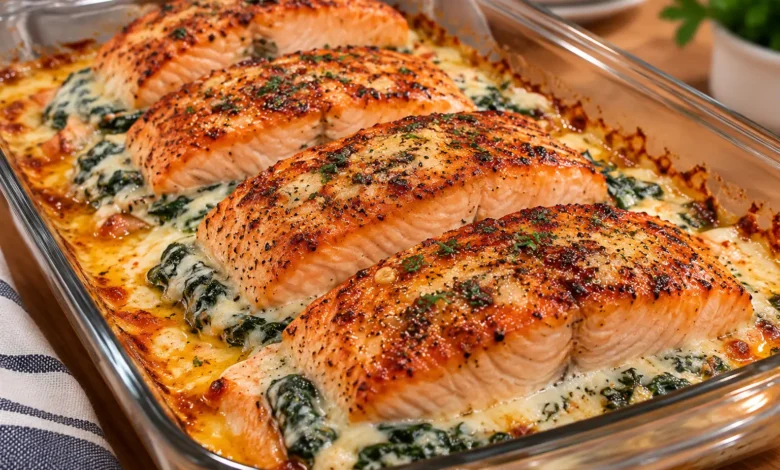
Some dinners simply feel more special than others. You set the plate down, see that glossy caramelized glaze covering a beautiful piece of salmon, and immediately feel like you made something worthy of a restaurant menu. Brown Sugar Glazed Stuffed Salmon gives you exactly that experience without requiring complicated techniques or hours in the kitchen.
The first bite brings several flavors together at once. You get tender, flaky salmon, a creamy spinach and cheese center, savory garlic, and a buttery brown sugar glaze that caramelizes beautifully in the oven. A little lemon keeps everything bright, while Dijon mustard and soy sauce give the sweetness enough savory contrast.
This is the kind of salmon recipe you can make for a relaxed family dinner and still feel confident serving to guests. It also works beautifully for date night, birthdays, holiday meals, or those evenings when you simply want dinner to feel a little more exciting.
Below, you’ll learn how to prepare the salmon, make the creamy stuffing, mix the brown sugar glaze, and cook everything so the fish stays moist and flavorful.
What Is Brown Sugar Glazed Stuffed Salmon?
Brown Sugar Glazed Stuffed Salmon combines thick salmon fillets with a creamy savory filling and a sweet-and-savory glaze.
Instead of simply seasoning the top of your salmon, you carefully cut a pocket into each fillet and fill it with a mixture of cream cheese, spinach, Parmesan, garlic, herbs, and lemon.
The outside gets brushed with a glaze made from brown sugar, butter, soy sauce, Dijon mustard, garlic, and lemon juice.
As the salmon bakes, the brown sugar begins to caramelize. You end up with a shiny, flavorful exterior surrounding soft salmon and a rich, creamy center.
The contrasting textures are a big part of what makes this dish memorable.
Why You’ll Love Brown Sugar Glazed Stuffed Salmon
You don’t need a long ingredient list or complicated cooking techniques to make this dinner impressive.
You’ll love this recipe because it is:
- Sweet, savory, creamy, and buttery
- Easy enough for a weeknight
- Elegant enough for entertaining
- Simple to customize
- Delicious with potatoes, rice, vegetables, or salad
- Prepared mostly in one baking dish
- Packed with satisfying salmon and a rich filling
Salmon also provides protein, omega-3 fatty acids, vitamins, and minerals, making it a useful addition to a varied diet.
What Does Brown Sugar Glazed Salmon Taste Like?
The first flavor you’ll notice is the slightly caramelized sweetness from the brown sugar. It doesn’t stand alone, though.
Soy sauce contributes saltiness and savory depth, Dijon adds tang, garlic gives the glaze warmth, and lemon cuts through the richness.
Then you reach the filling.
Cream cheese creates a smooth texture, Parmesan provides a salty edge, and spinach and herbs add freshness. Combined with flaky salmon, you get a dish that tastes rich without relying entirely on sweetness.
Brown Sugar Glazed Stuffed Salmon Ingredients
You’ll use two simple groups of ingredients: one for the salmon and creamy stuffing and another for the glaze.
Ingredients for the Stuffed Salmon
| Ingredient | Amount | Purpose |
|---|---|---|
| Thick salmon fillets | 4 | Main protein |
| Cream cheese, softened | 4 oz | Creamy base for stuffing |
| Fresh spinach | 1 cup | Adds texture and freshness |
| Parmesan cheese | ¼ cup | Adds savory flavor |
| Garlic, minced | 2 cloves | Adds aromatic flavor |
| Lemon juice | 1 tbsp | Brightens the filling |
| Fresh parsley | 2 tbsp | Adds freshness |
| Salt | To taste | Enhances flavor |
| Black pepper | To taste | Adds seasoning |
| Paprika | ½ tsp | Adds color and mild flavor |
Ingredients for the Brown Sugar Glaze
| Ingredient | Amount | Purpose |
|---|---|---|
| Brown sugar | ⅓ cup | Sweetness and caramelization |
| Butter, melted | 2 tbsp | Richness |
| Soy sauce | 1 tbsp | Savory flavor |
| Dijon mustard | 1 tbsp | Tang and balance |
| Garlic, minced | 1 clove | Savory aroma |
| Lemon juice | 1 tbsp | Acidity |
| Paprika | ½ tsp | Color and seasoning |
Ingredient Substitutions
You have plenty of room to personalize the recipe.
Baby kale can replace spinach, while Neufchâtel cheese can be used instead of regular cream cheese. You can replace parsley with fresh dill if you enjoy its flavor with seafood.
For a different cheese profile, try shredded mozzarella in the filling. It melts beautifully and produces a mild, stretchy center.
You can also experiment with the glaze. A little honey or maple syrup can replace part of the brown sugar, although the flavor and consistency will change.
How to Choose Salmon for Stuffing
The thickness of your salmon matters more than you might expect.
Thin fillets are difficult to cut and stuff without breaking. Look for thick center-cut portions whenever possible. Similar-sized pieces will also cook more evenly.
Fresh vs. Frozen Salmon
Either can work.
If you’re starting with frozen salmon, thaw it completely before cutting the pockets. Once thawed, pat the surface thoroughly with paper towels.
Removing excess moisture helps your seasoning and glaze cling to the fish instead of sliding into the bottom of the baking dish.
For safe thawing, seafood can be thawed gradually in the refrigerator. FoodSafety.gov also notes that faster thawing can be done in a sealed bag submerged in cold water, changing the water every 30 minutes.
How to Make Brown Sugar Glazed Stuffed Salmon
Once your ingredients are ready, assembly is surprisingly straightforward.
Step 1: Prepare the Salmon
Preheat your oven to 400°F (204°C).
Lightly grease a baking dish or line a baking sheet with parchment paper.
Pat the salmon dry.
Using a sharp knife, carefully cut a pocket horizontally through the thickest side of each fillet. Don’t slice all the way through—you want the opposite side to remain connected.
Season the salmon lightly with salt, black pepper, and paprika.
How to Cut the Salmon Pocket
Work slowly rather than trying to create a large opening immediately.
Insert your knife into the thickest portion and gradually deepen the pocket. You only need enough space to hold several spoonfuls of filling.
Keeping the opening relatively small also helps prevent the filling from spilling out during baking.
Step 2: Make the Creamy Spinach Filling
If your spinach leaves are large, roughly chop them first.
For a softer filling, you can briefly wilt the spinach in a skillet and then squeeze away excess moisture.
Combine the softened cream cheese, spinach, Parmesan, garlic, lemon juice, and parsley in a medium bowl.
Mix until everything is evenly distributed.
Taste the mixture before it comes in contact with the raw fish and adjust the seasoning if necessary.
The finished stuffing should be thick and creamy rather than watery.
Step 3: Stuff the Salmon
Divide the filling between the four salmon portions.
Gently open each pocket and spoon the cream cheese mixture inside.
Don’t pack the pockets too tightly. A small amount of filling showing at the opening looks attractive and allows you to see the creamy center once the salmon is cooked.
Arrange the stuffed fillets in your prepared baking dish.
How to Make the Brown Sugar Glaze
This glaze is what transforms an ordinary stuffed salmon dinner into something particularly flavorful.
In a small bowl, combine:
- ⅓ cup brown sugar
- 2 tablespoons melted butter
- 1 tablespoon soy sauce
- 1 tablespoon Dijon mustard
- 1 minced garlic clove
- 1 tablespoon lemon juice
- ½ teaspoon paprika
Whisk until thoroughly combined.
Brush or spoon the glaze generously over each stuffed salmon fillet.
Light Brown Sugar vs. Dark Brown Sugar
Both work, but you’ll notice a slight flavor difference.
Light brown sugar has a milder caramel character and allows the other glaze ingredients to stand out.
Dark brown sugar contains more molasses, giving you a deeper, richer flavor.
If this is your first time making the recipe, light brown sugar is an easy starting point.
How to Bake Brown Sugar Glazed Stuffed Salmon
Transfer the glazed salmon to your preheated oven.
Bake at 400°F until the salmon is cooked through. Exact timing will depend on the thickness and starting temperature of your fillets, so checking doneness is more reliable than depending only on a timer.
FoodSafety.gov lists 145°F (63°C) as the safe minimum internal temperature for fish such as salmon. It also notes that properly cooked fish should no longer be translucent and should separate easily with a fork.
Check the temperature in the thickest portion of the fish.
How to Get a Caramelized Glaze
If you want a darker, stickier surface, brush a little more glaze over the salmon toward the end of cooking.
You can briefly place it under the broiler to encourage caramelization.
Watch it constantly.
Brown sugar can move from beautifully caramelized to burned surprisingly quickly under direct heat.
Once finished, allow your salmon to rest briefly before serving.
Tips for the Best Brown Sugar Glazed Stuffed Salmon
A few small details can make a noticeable difference:
- Choose thick salmon fillets. They’re easier to stuff.
- Pat your salmon dry. Excess moisture prevents good browning.
- Don’t slice through the fillet. Keep the back of your stuffing pocket connected.
- Drain your spinach. Watery spinach can thin the filling.
- Don’t overfill the salmon. Too much filling will spill out.
- Use a thermometer. It takes the guesswork out of checking doneness.
- Watch the glaze carefully. Brown sugar burns easily under high heat.
- Add fresh lemon at the table. A final squeeze helps balance the richness.
Common Mistakes to Avoid
Overcooking Your Salmon
This is probably the biggest mistake you can make.
Because salmon continues cooking as its temperature rises in the oven, repeatedly adding extra minutes “just to make sure” can leave you with dry fish.
Use an instant-read thermometer for a more reliable result.
Making the Stuffing Too Wet
Spinach contains a surprising amount of moisture.
If you cook it before adding it to the cream cheese, squeeze out excess liquid first.
Your filling should remain thick enough to sit inside the salmon pocket.
Burning the Brown Sugar Glaze
Sugar caramelizes rapidly.
If you’re broiling your salmon at the end, stay beside the oven and check it frequently.
Cutting Through the Salmon
Don’t worry if your first pocket isn’t perfect.
Just avoid cutting entirely through the opposite side. Keeping the fillet intact makes stuffing much easier.
Brown Sugar Glazed Stuffed Salmon Variations
Once you’ve mastered the basic version, you can use the same method to create several variations.
Crab-Stuffed Salmon
Fold cooked crab meat into your cream cheese mixture.
Combine it with garlic, Parmesan, lemon, and herbs for an even more seafood-forward dinner.
Shrimp-Stuffed Salmon
Chop cooked shrimp into small pieces and mix them into the filling.
Shrimp works particularly well with garlic, spinach, Parmesan, and lemon.
Spicy Brown Sugar Stuffed Salmon
If you prefer sweet heat, add Cajun seasoning, cayenne, crushed red pepper, or a small amount of hot sauce.
The heat creates a delicious contrast against the caramelized brown sugar.
What to Serve With Brown Sugar Glazed Stuffed Salmon
Because this salmon is rich and flavorful, simple sides work especially well.
For vegetables, try:
- Roasted asparagus
- Garlic green beans
- Steamed broccoli
- Roasted Brussels sprouts
- Glazed carrots
If you want something more filling, serve it with garlic mashed potatoes, roasted baby potatoes, wild rice, lemon rice, or quinoa.
For a lighter dinner, pair your salmon with a cucumber salad, garden salad, or lemony arugula salad.
How to Store and Reheat Stuffed Salmon
If you have leftovers, transfer them to a shallow airtight container and refrigerate them promptly.
FoodSafety.gov recommends refrigerating perishable foods within two hours and using cooked leftovers within four days. Leftovers should be reheated to 165°F (74°C).
How to Reheat Without Drying Out the Salmon
Gentle reheating works best.
Place the salmon in a baking dish and loosely cover it to help retain moisture. Warm it until heated through rather than exposing it to unnecessarily high heat for a long time.
Cream cheese-based stuffing may change slightly in texture after freezing, so refrigerated leftovers generally provide the best texture.
Brown Sugar Glazed Stuffed Salmon Recipe at a Glance
| Recipe Detail | Information |
|---|---|
| Main ingredient | Salmon |
| Flavor | Sweet, savory, creamy |
| Cooking method | Oven-baked |
| Oven temperature | 400°F |
| Difficulty | Easy to moderate |
| Servings | 4 |
| Best for | Family dinner, date night, entertaining |
FAQ About Brown Sugar Glazed Stuffed Salmon
What is the best filling for Brown Sugar Glazed Stuffed Salmon?
A combination of cream cheese, spinach, Parmesan, garlic, lemon, and fresh herbs gives you a creamy filling that complements the sweet glaze. You can also add cooked crab or shrimp.
Can you prepare Brown Sugar Glazed Stuffed Salmon ahead of time?
You can prepare the filling and glaze in advance and refrigerate them separately. You can also do some assembly ahead of cooking, provided the raw salmon remains properly refrigerated. Keep raw seafood separate from ready-to-eat foods to reduce cross-contamination.
Can you use frozen salmon?
Yes. Thaw your salmon completely and pat it dry before cutting and stuffing it.
How do you keep stuffed salmon from drying out?
Choose thick fillets and monitor their internal temperature instead of relying solely on baking time. Overcooking is one of the primary reasons salmon becomes dry.
Why does brown sugar taste good with salmon?
Salmon has a naturally rich flavor that works well with contrasting sweetness. Adding soy sauce, Dijon mustard, lemon, and garlic prevents the glaze from tasting one-dimensional.
Can you make the brown sugar glaze less sweet?
Yes. Reduce the brown sugar slightly and emphasize ingredients such as Dijon mustard, garlic, lemon juice, or soy sauce. Keep in mind that changing the sugar quantity can also affect caramelization.
Can you make Brown Sugar Glazed Stuffed Salmon in an air fryer?
Yes, provided your stuffed fillets fit comfortably inside the basket without being crowded. Cooking time varies considerably by air fryer and fillet thickness, so use internal temperature to determine when the salmon is safely cooked rather than depending on a universal cooking time.
What vegetables go well with Brown Sugar Glazed Stuffed Salmon?
Asparagus, broccoli, green beans, Brussels sprouts, spinach, and roasted carrots all complement the sweet-savory salmon beautifully.
Conclusion
Brown Sugar Glazed Stuffed Salmon gives you the kind of dinner that looks elaborate when it reaches the table but doesn’t require professional cooking skills to prepare.
You get tender salmon surrounding a creamy spinach and Parmesan filling, while the outside develops a buttery brown sugar glaze with hints of garlic, Dijon, soy sauce, and lemon.
Better still, you can make the recipe your own. Add crab for a seafood-filled version, mix in chopped shrimp, bring some heat with Cajun seasoning, or experiment with different herbs and cheeses.
Pair your stuffed salmon with roasted vegetables for a lighter dinner or add buttery potatoes or rice when you want something more comforting.
Once you try it, don’t forget to save this Brown Sugar Glazed Stuffed Salmon recipe for your next dinner. If you make it, leave a comment and share how you customized your filling—you might give another home cook their next favorite salmon idea.
Brown Sugar Glazed Stuffed Salmon






 Want an easier way to get my recipes? ❤️