
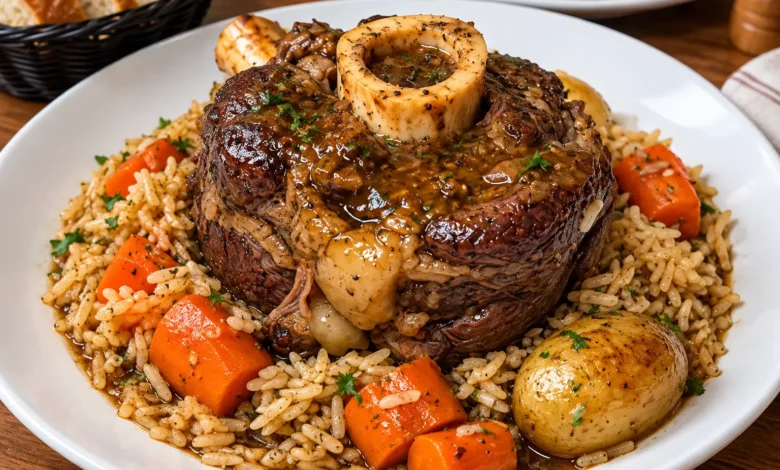
There’s nothing quite like the smell of beef slowly cooking in your kitchen, filling your home with the comforting aroma of garlic, herbs, and rich homemade gravy. You know dinner will be special when the meat is so tender that you barely need a fork to pull it apart.
If you’ve ever purchased beef shank and wondered how to turn this tough cut into something delicious, this Braised Beef Shank recipe is exactly what you need. With a few simple ingredients, a heavy pot, and a little patience, you can create a restaurant-quality meal without complicated techniques.
The secret is slow cooking. As the beef gently simmers in savory broth with vegetables and herbs, its connective tissue softens, creating juicy, fork-tender meat and a deeply flavorful sauce.
Whether you’re preparing a cozy Sunday dinner or looking for an impressive meal to share with family, this oven-braised beef shank is a wonderful choice.
What Is Braised Beef Shank?
Beef shank comes from the leg of the cow, an area that gets plenty of exercise. Because of this, the meat contains substantial connective tissue, giving it a firm texture when raw.
Unlike naturally tender cuts such as filet mignon, beef shank benefits from slow, moist cooking. When prepared correctly, it becomes incredibly tender while maintaining its rich beef flavor.
Braising involves searing the meat first, then cooking it slowly in a covered pot with a moderate amount of liquid.
Why Is Beef Shank Perfect for Braising?
The secret lies in collagen, a protein found in connective tissue. During prolonged cooking with moisture, collagen gradually converts into gelatin, giving the meat a tender texture and the sauce a silky consistency.
Bone-in beef shanks are particularly flavorful because the bones and marrow contribute richness to the cooking liquid.
Bone-In vs. Boneless Beef Shank
Both cuts work well, but they offer slightly different results.
- Bone-in beef shank: Provides a richer cooking liquid and attractive presentation.
- Boneless beef shank: Easier to portion and serve, with less preparation at the table.
For this recipe, bone-in beef shanks are recommended because they help create a flavorful braising sauce.
Why You’ll Love This Braised Beef Shank Recipe
You don’t need expensive ingredients or advanced cooking skills to prepare a satisfying beef dinner.
Here are several reasons you’ll want to make this recipe again.
- Incredibly tender meat: Slow cooking transforms firm beef shank into soft, fork-tender beef.
- Rich homemade gravy: Beef broth, garlic, vegetables, and herbs create a savory sauce.
- Simple ingredients: Most ingredients are everyday kitchen staples.
- Perfect for family dinners: The recipe produces a hearty meal that pairs beautifully with classic sides.
- Great for leftovers: The flavors often become even more developed after refrigeration.
- Easy to customize: You can adjust the herbs, vegetables, and seasonings to suit your preferences.
Best of all, most of the cooking happens in the oven, giving you time to prepare your side dishes or enjoy your afternoon.
Ingredients for Braised Beef Shank
You only need a handful of ingredients to build the deep flavors that make this dish so satisfying.
Braised Beef Shank Ingredients
| Ingredient | Amount |
|---|---|
| Bone-in beef shanks | 3–4 lbs |
| Olive oil | 2 tablespoons |
| Yellow onion, diced | 1 large |
| Carrots, chopped | 2 medium |
| Celery stalks, chopped | 2 |
| Garlic cloves, minced | 5 |
| Tomato paste | 2 tablespoons |
| Beef broth | 3 cups |
| Balsamic vinegar | 2 tablespoons |
| Worcestershire sauce | 1 tablespoon |
| Fresh rosemary | 2 sprigs |
| Fresh thyme | 3 sprigs |
| Bay leaves | 2 |
| Salt | 1½ teaspoons, or to taste |
| Black pepper | 1 teaspoon |
| Smoked paprika | 1 teaspoon |
| Unsalted butter, optional | 1 tablespoon |
| Fresh parsley, optional | For garnish |
Choosing the Best Beef Shanks
When shopping, look for beef shanks that are approximately 1½–2 inches thick. Pieces of similar thickness will cook more evenly.
Choose meat with a fresh appearance and some connective tissue throughout. That connective tissue is what helps create the tender texture after slow cooking.
Ingredient Substitutions
You can make a few adjustments without sacrificing flavor.
- Beef broth: Use low-sodium broth to control the saltiness.
- Fresh herbs: Substitute approximately ½ teaspoon dried rosemary and 1 teaspoon dried thyme.
- Balsamic vinegar: Replace with red wine vinegar, using slightly less at first.
- Vegetables: Add mushrooms or parsnips for extra flavor.
- Worcestershire sauce: Choose a suitable alternative if you need a gluten-free or anchovy-free version.
How to Make Braised Beef Shank Step by Step
This recipe requires approximately 20–25 minutes of preparation, followed by slow cooking in the oven.
Step 1: Prepare and Season the Beef
Preheat your oven to 325°F (163°C).
Pat the beef shanks dry with paper towels. Removing surface moisture helps the meat develop a better crust during searing.
Season both sides evenly with salt, black pepper, and smoked paprika.
Step 2: Sear the Beef Shanks
Heat olive oil in a large Dutch oven over medium-high heat.
Add the beef shanks in a single layer, working in batches if necessary.
Sear for approximately 3–4 minutes per side until a deep golden-brown crust develops.
Transfer the browned beef to a plate.
Don’t skip this step. Browning creates savory flavors that will carry through the entire dish.
Step 3: Cook the Vegetables
Reduce the heat to medium.
Add the diced onion, carrots, and celery to the same pot.
Cook for about 5 minutes, stirring occasionally, until the vegetables begin to soften.
Add the minced garlic and tomato paste. Stir for another minute until fragrant.
The tomato paste will deepen in color slightly, helping develop the rich flavor of your sauce.
Step 4: Prepare the Braising Liquid
Pour the beef broth into the Dutch oven.
Use a wooden spoon to scrape the browned bits from the bottom of the pot. These bits contain concentrated flavor from the seared beef.
Stir in the balsamic vinegar and Worcestershire sauce.
Add the rosemary, thyme, and bay leaves.
Step 5: Braise the Beef Shanks
Return the beef shanks to the pot, arranging them so the liquid reaches approximately halfway up their sides.
If necessary, add a little additional broth.
Bring the liquid to a gentle simmer, then cover the Dutch oven with a tight-fitting lid.
Transfer to the preheated oven.
Cook for approximately 2½–3½ hours, checking occasionally, until the beef becomes very tender.
If the meat still feels firm when pierced with a fork, continue cooking and check again after 20–30 minutes.
Step 6: Finish the Gravy
Carefully remove the beef shanks and place them on a serving platter.
Discard the rosemary stems, thyme stems, and bay leaves.
Skim excess fat from the surface of the cooking liquid.
If you prefer a thicker gravy, simmer the sauce uncovered on the stovetop until it reaches your desired consistency.
For an extra-smooth finish, stir in one tablespoon of unsalted butter.
Step 7: Serve and Enjoy
Return the beef to the sauce or spoon the gravy generously over each serving.
Garnish with freshly chopped parsley.
Serve immediately with creamy mashed potatoes, rice, or your favorite vegetables.
How Long Does It Take to Braise Beef Shank?
Cooking time depends on the thickness of your beef shanks and the method you choose.
| Cooking method | Temperature | Approximate time |
|---|---|---|
| Dutch oven | 325°F | 2½–3½ hours |
| Slow cooker | Low | 7–9 hours |
| Slow cooker | High | 4–6 hours |
| Pressure cooker | High pressure | 50–70 minutes |
| Stovetop | Gentle simmer | 2½–4 hours |
These times are estimates. The best way to determine doneness is by checking the texture.
How Do You Know When Beef Shank Is Tender?
Your beef shank is ready when a fork slides easily into the meat and the connective tissue has softened.
The beef may begin separating from the bone, but it should still be moist and flavorful.
If the meat feels chewy, it usually needs additional cooking time.
Tips for Making Perfect Braised Beef Shank
A few simple techniques can make a noticeable difference in the finished dish.
Brown the Meat Properly
Give each beef shank enough space while searing. Crowding the pot traps moisture and prevents proper browning.
Keep the Heat Low and Steady
Braising works best with gentle heat. Vigorous boiling can tighten the meat fibers and cause excessive liquid evaporation.
Use a Heavy Pot
A Dutch oven distributes heat evenly and helps maintain a consistent cooking environment.
Don’t Add Too Much Liquid
The beef doesn’t need to be completely submerged. Keeping the liquid partway up the sides allows the meat to braise rather than boil.
Adjust the Sauce at the End
Always taste the gravy before adding additional salt. As the liquid reduces, the flavors become more concentrated.
Common Mistakes to Avoid When Braising Beef Shank
Even a straightforward recipe can go wrong if you rush the process.
1. Skipping the searing step
Without browning, your sauce may lack depth. Take a few minutes to develop a flavorful crust.
2. Cooking at excessive heat
High heat can evaporate the liquid too quickly. Maintain a gentle simmer throughout cooking.
3. Removing the beef too early
Beef shank requires patience. If it’s still tough, keep cooking until the connective tissue softens.
4. Forgetting to check the liquid
Check occasionally to ensure the pot hasn’t dried out. Add warm broth if necessary.
5. Adding too much salt
Broth and Worcestershire sauce already contribute sodium, so season gradually.
Delicious Braised Beef Shank Variations
Once you’ve mastered the basic recipe, you can experiment with different flavor combinations.
Italian-Style Braised Beef Shank
Add one cup of crushed tomatoes, dried oregano, and fresh parsley to the braising liquid.
Serve with creamy polenta or pasta for an Italian-inspired dinner.
Garlic and Herb Braised Beef Shank
Increase the garlic to eight cloves and add extra rosemary and thyme.
This variation creates a particularly aromatic sauce.
Slow Cooker Braised Beef Shank
Sear the beef and sauté the vegetables as directed.
Transfer everything to your slow cooker, using enough broth to partially surround the meat.
Cook on low for approximately 7–9 hours, or until tender.
Spicy Tomato Braised Beef Shank
Add crushed tomatoes, smoked paprika, and a pinch of red pepper flakes.
The result is a slightly spicy, tomato-rich sauce that pairs beautifully with rice.
What to Serve with Braised Beef Shank
The rich gravy makes this dish especially delicious when paired with sides that absorb sauce.
| Side dish | Why it works |
|---|---|
| Creamy mashed potatoes | Absorb the rich gravy |
| Garlic butter rice | Balances the savory beef |
| Buttered egg noodles | Creates a hearty meal |
| Creamy polenta | Complements the tender meat |
| Roasted carrots | Add natural sweetness |
| Steamed green beans | Provide freshness |
| Crusty bread | Perfect for dipping into gravy |
How to Serve Braised Beef Shank
For an attractive presentation, spoon creamy mashed potatoes onto a plate.
Place a tender beef shank on top and drizzle generously with gravy.
Add roasted vegetables on the side and finish with chopped parsley.
This simple presentation makes your homemade dinner look restaurant-worthy.
How to Store and Reheat Braised Beef Shank
Braised beef shank is excellent for meal preparation because it reheats well when stored with its sauce.
Refrigerating Leftovers
Allow the beef to cool briefly, then transfer it to shallow, airtight containers with the gravy.
Refrigerate within two hours of cooking.
Properly refrigerated leftovers can be stored for 3–4 days.
Can You Freeze Braised Beef Shank?
Yes. Place cooled beef and sauce in freezer-safe containers, leaving room for expansion.
Freeze for approximately 2–3 months for best quality.
Thaw overnight in the refrigerator before reheating.
How to Reheat Without Drying Out the Beef
Place the beef in a covered saucepan with its gravy and a splash of broth.
Warm gently over low heat, stirring the sauce occasionally.
Reheat leftovers to an internal temperature of 165°F (74°C).
Avoid prolonged high heat, which can dry out the meat.
Is Braised Beef Shank Healthy?
Beef shank provides several important nutrients, including protein, iron, zinc, and vitamin B12.
Protein supports muscle maintenance, while iron contributes to normal oxygen transport in your body.
However, the overall nutritional content depends on the portion size, amount of fat, and ingredients used in the sauce.
For a balanced meal, serve your braised beef shank with vegetables and a moderate portion of potatoes, rice, or another whole-grain side.
You can also reduce the sodium by choosing low-sodium beef broth and adjusting the seasoning carefully.
Frequently Asked Questions About Braised Beef Shank
What Is the Best Way to Cook Braised Beef Shank?
Slow braising in a covered Dutch oven is one of the most reliable methods. The combination of moisture, gentle heat, and sufficient cooking time helps soften the connective tissue.
How Long Should You Cook Braised Beef Shank?
Most bone-in beef shanks require approximately 2½–3½ hours at 325°F, although thicker pieces may need longer. Check the meat for fork tenderness rather than relying only on the clock.
Why Is My Braised Beef Shank Still Tough?
If your beef shank remains tough, it likely needs more cooking time. Continue braising with sufficient liquid until the connective tissue softens.
Can You Make Braised Beef Shank Without Wine?
Absolutely. Beef broth, tomato paste, balsamic vinegar, and Worcestershire sauce create a rich, flavorful braising liquid without adding wine.
Is Braised Beef Shank Better in the Oven or Slow Cooker?
Both methods produce delicious results. The oven provides convenient temperature control and allows easy sauce reduction, while the slow cooker is ideal when you want minimal attention during cooking.
Can You Make Braised Beef Shank Ahead of Time?
Yes. You can prepare it a day in advance, refrigerate it safely in its sauce, and reheat before serving. The flavors often develop further overnight.
What Is the Difference Between Braised Beef Shank and Osso Buco?
Traditional osso buco is an Italian dish prepared with cross-cut veal shanks, although beef shanks are also used in variations. Both rely on slow braising to achieve tender meat.
Should Braised Beef Shank Fall Off the Bone?
Well-braised beef shank should be fork-tender and may pull away from the bone easily. However, it doesn’t have to fall completely apart to be properly cooked.
Conclusion: Make This Braised Beef Shank Recipe for Your Next Family Dinner
You don’t need an expensive cut of beef to create a memorable dinner. With a little patience and the right cooking method, you can transform beef shank into tender, flavorful meat surrounded by a rich homemade gravy.
This Braised Beef Shank recipe brings together simple vegetables, aromatic herbs, and slow cooking to create a comforting meal that’s perfect for family gatherings, Sunday dinners, or a quiet evening at home.
Serve it over creamy mashed potatoes, spoon on plenty of gravy, and enjoy every tender bite.
Now it’s your turn! Try this Braised Beef Shank recipe and let us know how it turned out. Do you prefer serving yours with mashed potatoes, rice, or creamy polenta? Share your favorite combination in the comments, and don’t forget to save this recipe for your next comforting homemade dinner!
Braised Beef Shank Recipe





 Want an easier way to get my recipes? ❤️