
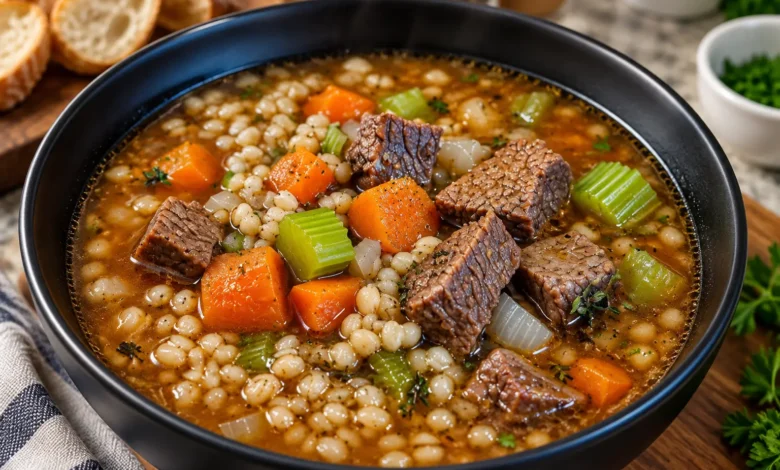
There are certain meals that simply feel like home, and Beef Barley Soup is one of them. When the weather turns chilly or you want something warm and filling after a long day, a steaming bowl of beef and barley soup delivers the kind of comfort you crave.
You get tender chunks of beef, chewy barley, carrots, celery, and onions in a rich, savory broth. Every spoonful has a little bit of everything, which makes this soup satisfying enough to serve as a complete dinner.
Another reason you’ll appreciate homemade Beef Barley Soup is its simplicity. You don’t need unusual ingredients or complicated cooking techniques. Most of the work happens in one pot, and the longer the beef gently simmers, the more the flavors come together.
Whether you’re preparing dinner for your family, stocking your refrigerator with leftovers, or looking for a cozy cold-weather meal, this recipe deserves a place in your collection.
What Is Beef Barley Soup?
Beef Barley Soup is a hearty soup made primarily with chunks of beef, barley, vegetables, and beef broth. The beef slowly cooks until tender while the barley absorbs the savory broth and develops its pleasantly chewy texture.
Unlike a light broth-based soup, this one has plenty of substance. Barley naturally absorbs liquid as it cooks, helping give the broth more body without requiring a flour-based thickener.
What Does Beef Barley Soup Taste Like?
The first thing you’ll notice is the deep, savory flavor of the beef broth. Browning the beef before simmering it adds another layer of flavor, while onions, carrots, celery, garlic, and herbs round out the soup.
Barley has a mild, slightly nutty flavor that works especially well with beef. Its chewy texture also gives you something different from the noodles or rice commonly found in other soups.
Is Beef Barley Soup Thick or Brothy?
It falls somewhere between the two.
When freshly prepared, you’ll have plenty of rich broth surrounding the beef, vegetables, and barley. As the soup sits, however, the barley continues absorbing liquid.
That means your leftovers may look considerably thicker the following day. Simply stir in additional beef broth when reheating if you’d like a soupier consistency.
Why You’ll Love This Homemade Beef Barley Soup
There are plenty of reasons to keep this recipe handy:
- It’s hearty enough to serve as a complete meal.
- Most of the cooking happens in one pot.
- You can use affordable cuts of beef.
- It’s easy to customize with different vegetables.
- Leftovers make an easy lunch or dinner.
- The ingredients are simple and readily available.
- You can prepare a large batch for meal prep.
Best of all, you don’t need to rush the process. Give your beef enough time to gently simmer and you’ll be rewarded with a much more tender, flavorful result.
Beef Barley Soup Ingredients
You can create a deeply flavored soup with surprisingly simple ingredients.
| Ingredient | Amount | Purpose |
|---|---|---|
| Beef chuck | 1½ pounds | Creates tender, flavorful pieces of beef |
| Pearl barley | ¾ cup | Gives the soup its signature chewy texture |
| Beef broth | 6 cups | Forms the savory base |
| Yellow onion | 1 medium | Adds sweetness and aromatic flavor |
| Carrots | 3 | Add color and natural sweetness |
| Celery | 3 stalks | Adds classic soup flavor |
| Garlic | 3 cloves | Adds savory depth |
| Tomato paste | 2 tablespoons | Deepens the broth |
| Olive oil | 1–2 tablespoons | Helps brown the beef |
| Worcestershire sauce | 1 tablespoon | Adds savory complexity |
| Dried thyme | 1 teaspoon | Adds earthy herbal flavor |
| Bay leaf | 1–2 | Adds subtle background flavor |
| Salt | To taste | Enhances the other flavors |
| Black pepper | To taste | Adds mild warmth |
| Fresh parsley | For garnish | Adds freshness before serving |
What Is the Best Beef for Beef Barley Soup?
Beef chuck is an excellent choice because it works well with longer, moist cooking. You can buy a chuck roast and cut it yourself or use packaged beef stew meat for convenience.
Try to cut your beef into relatively even bite-size pieces. They don’t have to be perfect, but similar sizes help them cook at roughly the same rate.
What Kind of Barley Should You Use?
Pearl barley is particularly convenient for homemade Beef Barley Soup. It becomes tender while maintaining enough chewiness to provide noticeable texture.
You may also encounter hulled barley and quick-cooking barley.
Hulled barley generally requires more cooking, while quick-cooking barley needs considerably less time. Always check your package because cooking times can vary between products.
Can You Use Quick-Cooking Barley?
Yes. Just don’t necessarily add it at the same time you would regular pearl barley.
Since quick-cooking barley can become tender much faster, add it closer to the end according to its package directions. This prevents it from becoming overly soft while you’re waiting for your beef to finish cooking.
How to Make Beef Barley Soup
Making a flavorful Beef Barley Soup is mostly about building the ingredients in stages rather than throwing everything into your pot at once.
Step 1: Prepare the Beef
Pat your beef dry with paper towels and cut it into bite-size pieces if necessary. Season it generously with salt and freshly ground black pepper.
Drying the surface helps you achieve better browning once the meat hits the hot pot.
Step 2: Brown the Beef
Heat olive oil in a large Dutch oven or heavy soup pot over medium-high heat.
Add the beef in batches rather than crowding everything into the pot at once. Brown the pieces on several sides, then transfer them to a plate.
Don’t worry about cooking the beef completely at this stage. You’re developing flavor; the beef will finish cooking in the broth.
Step 3: Sauté the Vegetables
Reduce the heat slightly and add your chopped onion, carrots, and celery.
Cook until they begin to soften, stirring occasionally. Add the minced garlic toward the end and cook briefly until fragrant.
Step 4: Build the Broth
Stir in the tomato paste and let it cook briefly before pouring in the beef broth.
Add Worcestershire sauce, thyme, and the bay leaf.
As you add the broth, scrape along the bottom of your pot with a wooden spoon. Those browned bits left behind from the beef contain plenty of flavor.
Step 5: Simmer the Beef
Return the browned beef and any accumulated juices to your pot.
Bring everything to a gentle simmer. Cover partially and cook until the beef starts becoming tender.
Avoid aggressively boiling your soup. A slow, steady simmer gives the beef time to become tender while the flavors develop.
Step 6: Add the Barley
Stir in your pearl barley and continue cooking until both the barley and beef are tender.
Check the soup occasionally because barley absorbs a surprising amount of liquid. If your Beef Barley Soup becomes thicker than you prefer, add another splash of beef broth.
Step 7: Taste and Serve
Remove the bay leaf.
Taste the broth and adjust the salt and black pepper as necessary. Sprinkle fresh parsley over the top and serve your soup while it’s hot.
The Secret to Tender Beef in Beef Barley Soup
One of the biggest differences between an average beef soup and an excellent one is the texture of the meat.
Brown Your Beef First
Browning creates flavors you won’t get by simply dropping raw beef into broth.
Give your beef some room in the pan and work in batches when necessary.
Keep the Soup at a Gentle Simmer
You don’t need an aggressive boil. Once the soup reaches a simmer, lower the heat and allow time to do the work.
Don’t Rush Tougher Beef Cuts
Chuck contains connective tissue that benefits from longer cooking in a moist environment. If your beef still seems tough, it may simply need more time.
Check it periodically and continue simmering until you can easily bite through a piece.
How to Keep Barley From Getting Too Soft
Barley gives this soup its wonderful texture, but overcooking it can leave you with a much thicker dish than you intended.
A few simple tricks help:
- Check the cooking time listed on your barley package.
- Don’t add quick-cooking barley too early.
- Maintain a gentle simmer rather than a hard boil.
- Keep extra broth available to adjust the consistency.
- If you’re preparing the soup well in advance, consider cooking the barley separately.
Cooking barley separately can be especially useful for meal prep. You can spoon the amount you need into each bowl instead of allowing it to sit in the broth and continue absorbing liquid.
Easy Beef Barley Soup Variations
Once you’ve mastered the basic recipe, you can easily adapt it using ingredients you already have.
Vegetable Beef Barley Soup
Increase the vegetables for an even more substantial bowl.
Try adding:
- Mushrooms
- Green beans
- Peas
- Corn
- Diced potatoes
- Chopped spinach
Add delicate vegetables toward the end so they don’t overcook.
Mushroom Beef Barley Soup
Mushrooms pair particularly well with beef and barley.
Slice cremini or button mushrooms and sauté them with your other vegetables. They contribute additional savory flavor while giving the finished soup even more texture.
Tomato Beef Barley Soup
If you enjoy a stronger tomato flavor, add diced tomatoes or increase the tomato paste.
Tomatoes also provide a pleasant acidity that balances the richness of your beef broth.
Slow Cooker Beef Barley Soup
You can adapt this recipe for your slow cooker.
For maximum flavor, brown your beef on the stovetop first. Transfer it to the slow cooker with your vegetables, broth, tomato paste, Worcestershire sauce, and seasonings.
Because slow cookers and barley varieties differ, use the timing recommended for your particular appliance and barley rather than assuming one cooking time works universally.
What to Serve With Beef Barley Soup
Because Beef Barley Soup already contains beef, grain, and vegetables, you don’t need much else to create a complete dinner.
Serve your bowl with:
- Crusty bread
- Garlic bread
- Warm dinner rolls
- Cornbread
- Green salad
- Roasted vegetables
- Grilled cheese
A thick slice of crusty bread is particularly useful for soaking up the savory broth left at the bottom of your bowl.
How to Store and Reheat Beef Barley Soup
This recipe is excellent for leftovers, although you’ll notice the barley continues soaking up broth during storage.
Refrigerating Leftover Beef Barley Soup
Transfer leftovers into shallow containers so they can cool efficiently and refrigerate them promptly. USDA guidance recommends refrigerating perishable leftovers within two hours and generally using refrigerated soups and stews within 3–4 days.
Don’t leave a large stockpot sitting on the counter for hours waiting for it to cool completely. Dividing soup among smaller, shallow containers helps it cool more quickly.
How to Reheat Beef Barley Soup
You’ll probably find that refrigerated Beef Barley Soup is thicker than it was when freshly prepared.
Transfer your desired portion to a saucepan and add a little broth or water. Heat it thoroughly while stirring occasionally.
For food safety, USDA guidance recommends reheating leftovers to 165°F; soups and similar liquids should be reheated thoroughly.
Can You Freeze Beef Barley Soup?
Yes.
Divide your cooled soup into freezer-safe containers, leaving appropriate room for expansion. Keep in mind that the barley may become somewhat softer after freezing and reheating.
If texture is especially important to you, freeze the soup without the barley and prepare fresh barley when you’re ready to serve it.
Common Beef Barley Soup Mistakes to Avoid
Even though this is a straightforward recipe, a few small mistakes can affect your results.
Overcrowding the Beef
If you pack too much beef into your pot, moisture accumulates and the meat tends to steam rather than brown.
Work in batches instead.
Using the Wrong Barley Timing
Not every barley product cooks at the same speed.
Read your package before adding it so you don’t end up with undercooked or overly soft barley.
Not Adding Enough Liquid
Barley absorbs broth during cooking and continues absorbing it afterward.
Keep additional beef broth nearby so you can easily adjust your soup.
Overcooking Your Vegetables
Your carrots and celery should be tender but still recognizable. If you’re using quicker-cooking vegetables such as peas or spinach, add them near the end.
Skipping the Final Taste
Broth, Worcestershire sauce, and other ingredients contain varying amounts of salt.
Instead of automatically adding more seasoning, taste your finished soup first. Then adjust the salt, pepper, or herbs.
Beef Barley Soup Nutrition and Ingredient Benefits
Beef Barley Soup combines several different food groups in a single bowl.
Beef contributes protein along with nutrients such as iron and vitamin B12. Barley supplies carbohydrates and fiber while also giving the soup its distinctive chewy texture. Carrots, celery, onions, and any additional vegetables add variety and flavor.
If you’d like to modify your soup, you can:
- Choose a leaner cut of beef.
- Use reduced-sodium beef broth.
- Increase the amount of vegetables.
- Adjust the serving size.
- Add leafy vegetables near the end of cooking.
The exact nutritional values will depend on your specific ingredients, brands, quantities, and serving size.
Frequently Asked Questions About Beef Barley Soup
What kind of barley is best for Beef Barley Soup?
Pearl barley is a convenient option because it cooks relatively quickly and develops a tender yet chewy texture. Hulled and quick-cooking barley can also work, but you’ll need to adjust the cooking time.
Do you cook barley before adding it to Beef Barley Soup?
You don’t have to. Pearl barley can cook directly in the soup, where it absorbs the flavorful broth. However, cooking it separately is useful if you’re making the soup ahead and want to prevent excessive thickening.
Why is my Beef Barley Soup too thick?
Your barley has probably absorbed much of the broth. Add beef broth a little at a time until your soup reaches your preferred consistency.
How do you thin Beef Barley Soup?
Warm the soup and gradually stir in beef broth. Give it a minute to combine before deciding whether you need more.
Can you make Beef Barley Soup ahead of time?
Absolutely. It’s a convenient make-ahead meal. Remember that the barley will continue absorbing liquid in the refrigerator, so keep extra broth available for reheating.
Can you freeze Beef Barley Soup?
Yes. Freeze individual or family-size portions in freezer-safe containers. The barley may become softer after thawing, so you can also freeze the soup base separately from the barley.
Can you make Beef Barley Soup in a slow cooker?
Yes. Browning the beef before transferring it to your slow cooker helps develop richer flavor. Follow the appropriate cooking time for your slow cooker and type of barley.
What vegetables go well in Beef Barley Soup?
Carrots, celery, and onions are classic choices, but mushrooms, peas, green beans, corn, potatoes, and leafy greens can also work well.
Final Tips for the Best Beef Barley Soup
Before you start cooking, remember these simple tips:
- Pat your beef dry before browning.
- Brown the beef in batches.
- Don’t rush the simmering process.
- Use a flavorful beef broth.
- Check your barley package for its cooking time.
- Keep extra broth nearby.
- Taste before adding additional salt.
- Add fresh parsley just before serving.
Small details like these can turn a simple pot of soup into a dinner you’ll want to make repeatedly.
Conclusion: Make This Beef Barley Soup for Your Next Cozy Dinner
A homemade Beef Barley Soup proves that comfort food doesn’t have to be complicated. With tender pieces of beef, chewy barley, colorful vegetables, and a deeply savory broth, you can turn straightforward ingredients into a satisfying meal for the whole family.
Take your time browning the beef, allow it to simmer until tender, and watch your barley as it cooks. Once everything comes together, you’ll have a warm, filling soup that’s equally suitable for a cozy Sunday dinner, a cold evening, or an easy make-ahead meal.
Serve it with warm crusty bread, save the leftovers for tomorrow, and don’t be surprised if this recipe earns a permanent spot in your cold-weather dinner rotation.
If you make this Beef Barley Soup, leave a comment and tell us how it turned out. Did you keep it classic or add mushrooms, extra vegetables, or your own favorite seasonings? Save the recipe for later, share it with someone who loves homemade comfort food, and give it a rating after you’ve tried it.

Beef Barley Soup





 Want an easier way to get my recipes? ❤️