
10 Healthy Juicing Recipes to Boost Your Energy and Immunity
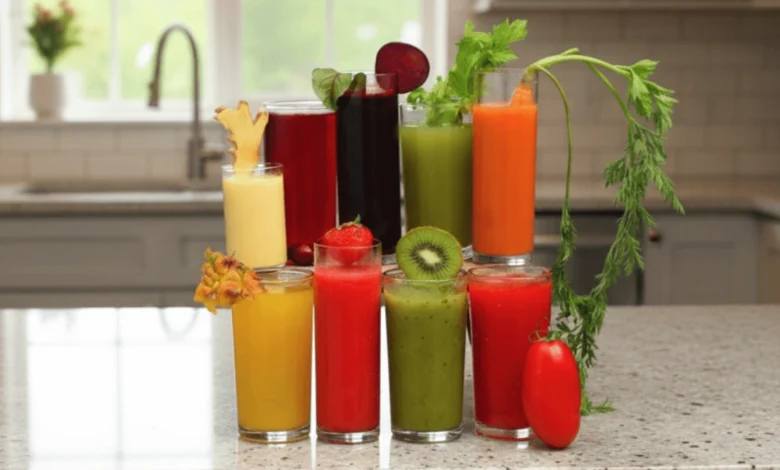
Juicing recipes are one of the simplest ways to pack more fruits and vegetables into your day—without complicated cooking or long prep. With the right combinations, a fresh homemade juice can taste amazing while delivering a concentrated dose of key nutrients like vitamin C, beta-carotene, potassium, and a wide range of antioxidants found in ingredients such as citrus, carrots, beets, leafy greens, ginger, and turmeric. Whether your goal is a more energized morning, better hydration, or an easy nutrition boost during a busy week, juicing gives you a fast and flexible option you can customize to your taste.
In this post, you’ll find 10 healthy juicing recipes designed around two popular goals: supporting energy and supporting immunity. You’ll also learn beginner-friendly tips—like choosing a juicer vs blender, balancing fruit and vegetables for a lower-sugar juice, and how to store fresh juice so it stays crisp and flavorful. If you’re new to juicing or looking for fresh ideas beyond the basics, these recipes and practical guidelines will help you make juices you’ll actually want to drink—again and again.
If you enjoy healthy, homemade recipes that balance flavor and nutrition, you might also like our Cottage Cheese Garlic Knots – a High-Protein, Low-Carb Comfort Bread
Why Juicing Recipes Help With Energy and Immunity
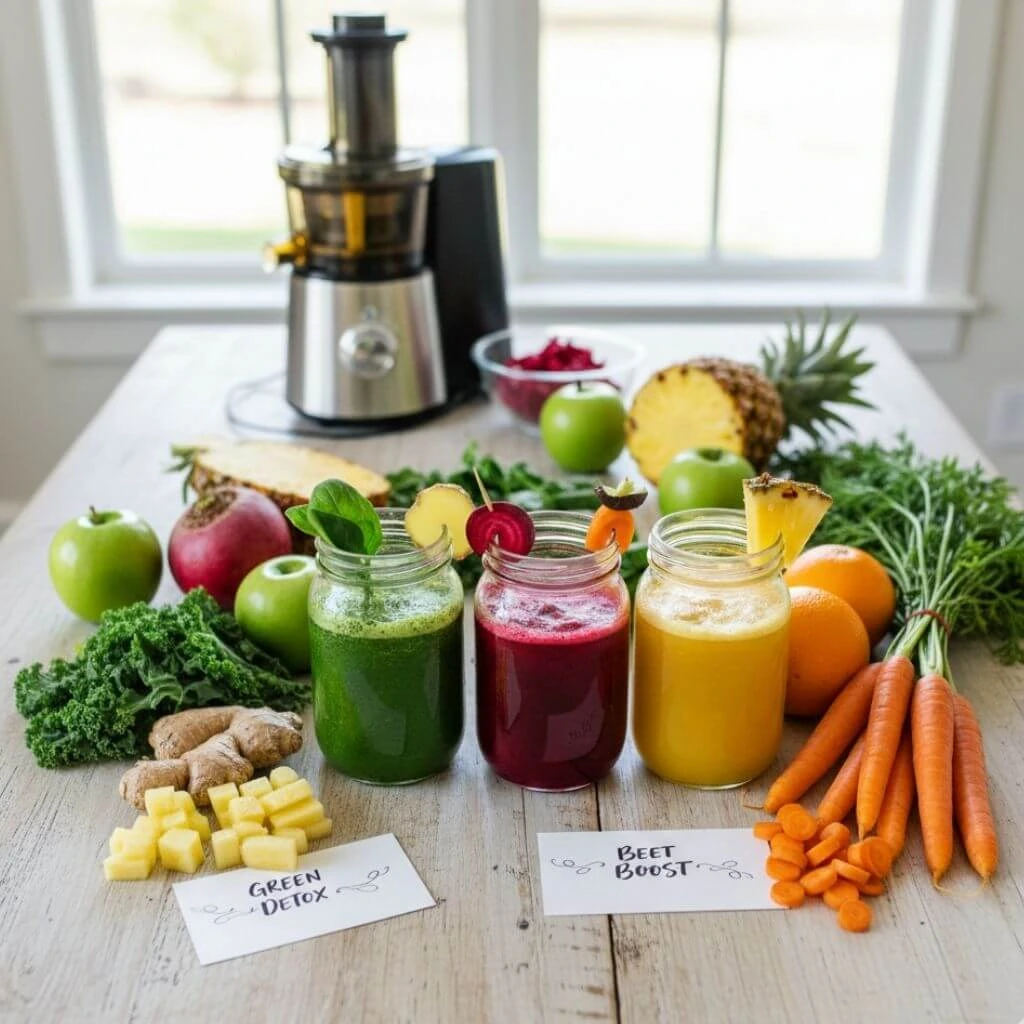
Juicing recipes can be a simple, effective way to increase your daily intake of nutrient-dense fruits and vegetables—especially when you’re short on time or struggle to eat enough produce consistently. A well-balanced homemade juice delivers a concentrated mix of vitamins, minerals, and antioxidants that support normal body functions related to energy levels, hydration, and immune function. The key is choosing ingredients intentionally (and not relying only on sweet fruits).
For energy, many juice recipes work because they support the foundations of how you feel throughout the day: hydration, electrolyte balance, and nutrient availability. Ingredients like cucumber, celery, citrus, and watermelon contribute fluids and minerals such as potassium and magnesium, which are involved in normal muscle function and energy metabolism. Beetroot is also popular in energy-boosting juice recipes because it naturally contains dietary nitrates, which are often discussed in sports nutrition for performance support.
For immunity, the goal is consistent micronutrient and antioxidant intake rather than “quick fixes.” Fruits and vegetables like oranges, lemons, grapefruit, berries, and leafy greens (spinach/kale) are rich in vitamin C, polyphenols, and other antioxidant compounds that help protect cells from oxidative stress. Add-ins like ginger and turmeric are commonly used for their anti-inflammatory and antioxidant properties, while ingredients like carrots provide beta-carotene (a precursor to vitamin A), which plays a role in maintaining healthy immune defenses.
One important note: juice is not a replacement for whole foods. Juicing removes most of the fiber (unless you keep some pulp), so it’s best used as a nutrient boost alongside balanced meals. If you want steadier energy and better blood sugar control, build your juicing recipes with more vegetables, include citrus for flavor, and keep fruit portions moderate—this gives you the benefits of fresh juice without turning it into a sugar-heavy drink.
If you want a science-backed overview of how nutrition supports normal immune function, the World Health Organization (WHO) has a helpful resource on {healthy diet}
Key nutrients in healthy juicing recipes (vitamin C, beta-carotene, antioxidants)
Healthy juicing recipes work best when they’re built around nutrient-dense produce, not just sweet fruit. Vitamin C (from oranges, lemon, grapefruit, kiwi, and berries) supports normal immune function and helps protect cells from oxidative stress. Beta-carotene (from carrots and sometimes leafy greens) is a plant compound your body can convert into vitamin A, which plays a role in maintaining healthy skin and immune defenses. You’ll also get a wide variety of antioxidants—like polyphenols and flavonoids—from berries, pomegranate, citrus, and greens. The more colorful your ingredient list, the broader the range of beneficial compounds you’re likely to include.
Hydration + electrolytes for natural energy (potassium, magnesium)
A surprising reason people feel better after drinking fresh juice is simple: hydration. Many fruits and vegetables used in juice recipes—such as cucumber, celery, watermelon, oranges, and leafy greens—contain a high water content plus minerals that support fluid balance. Potassium (common in citrus, leafy greens, and many fruits) helps regulate fluid balance and normal muscle function. Magnesium (found in leafy greens like spinach) is involved in energy metabolism and normal nervous system function. If you want juices that feel “energizing,” prioritize hydrating bases (cucumber/celery) and add citrus for flavor rather than relying on lots of sweet fruit.
Immunity support ingredients (ginger, turmeric, citrus, berries)
Some ingredients show up in immune-boosting juice recipes again and again because they bring both flavor and function. Citrus (orange, lemon, lime, grapefruit) is famous for vitamin C and makes vegetable-heavy juices taste brighter. Berries add antioxidants and a naturally sweet-tart profile that pairs well with greens. Ginger is often used for its warming, spicy kick and is widely studied for its bioactive compounds. Turmeric contains curcumin, a compound linked with antioxidant and anti-inflammatory activity; it works especially well when paired with citrus and a small piece of ginger. These ingredients won’t “cure” anything overnight, but they can help you build a consistent, nutrient-rich routine that supports overall immune health.
Juice vs smoothies: fiber, pulp, and nutrient absorption (juicer vs blender)
The biggest difference between juice and smoothies is fiber. A juicer separates most of the pulp, giving you a lighter drink that’s quick to consume—great if you want a fast nutrient boost or you don’t love thick textures. A blender keeps the whole fruit/vegetable (including fiber), which can help with fullness and steadier energy for many people. If you’re using a blender but still want a juice-like texture, you can strain it through a fine mesh strainer or nut milk bag—just note you’ll remove much of the fiber that way. For most people, a smart approach is to enjoy both: use juicing recipes for quick hydration and concentrated micronutrients, and use smoothies when you want a more filling option that retains fiber.
Juicing recipes for Beginners (Tools, Prep, and Best Practices)
If you’re new to juicing, the biggest “secret” is consistency. You don’t need expensive equipment or complicated recipes—you just need a simple system: pick the right tool, prep ingredients in batches, and build juices that taste good while staying balanced (not overly sugary). The tips below will help you make homemade juice recipes that are easier to stick with and better aligned with goals like energy and immunity.
If you’re drinking juice in the morning, adding protein can help you stay full longer—try these cheddar herb cottage cheese bagels alongside your favorite blend.
Juicer vs blender + straining (cold press, masticating, centrifugal options)
A juicer extracts liquid and leaves most of the pulp behind, giving you a smooth, light drink. There are a few common types:
- Centrifugal juicer: Fast and usually more affordable. Great for everyday fruits and vegetables, but may produce more foam and slightly more separation.
- Masticating / slow juicer: Slower but often extracts more juice from leafy greens (like spinach/kale) and tends to be quieter.
- Cold press (often used to describe slow/masticating style): Focuses on gentler extraction, which many people prefer for taste and texture.
A blender keeps the whole ingredient (including fiber). If you prefer a juice-like texture, blend with a little water and strain using a fine mesh strainer or nut milk bag. This method is budget-friendly, but cleanup can be messier and you’ll lose some of the convenience a juicer offers.
Beginner tip: If you’re unsure, start with a blender and straining method—then upgrade to a juicer later if you love juicing.
How to build balanced juice recipes (fruit + vegetable ratios, low sugar swaps)
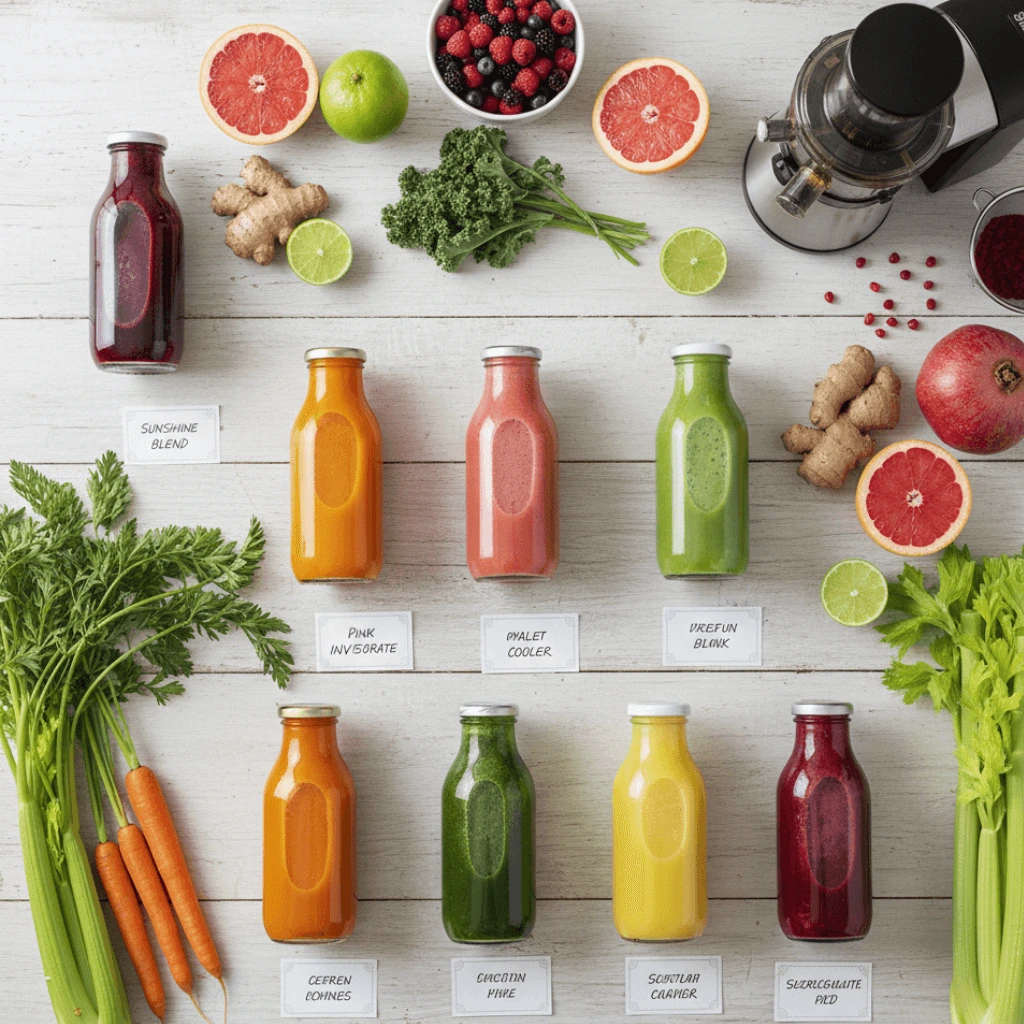
Many beginners accidentally make juices that are basically “liquid fruit.” They taste great, but they can be high in natural sugars and may not keep you feeling steady for long. A good rule is to start with a simple ratio:
- Beginner-friendly balance: ~50% vegetables / 50% fruit
- Lower-sugar balance (better for daily juicing): ~70% vegetables / 30% fruit
Use fruit strategically for flavor—apple, pineapple, orange, pear—and let vegetables do most of the work: cucumber, celery, carrots, spinach/kale.
Low-sugar swaps that still taste good:
- Add cucumber + celery as a hydrating base
- Use lemon/lime to brighten flavor without adding much sugar
- Use berries (strong flavor, often less sugary than tropical fruit)
- Add ginger for a “kick” that makes veggie juices feel exciting
How to store fresh juice safely (glass bottles, fridge time, freshness tips)
Fresh juice is best right after making it, but you can absolutely prep it for busy days if you store it correctly.
Best storage method:
- Use clean, airtight glass bottles/jars
- Fill close to the top to reduce air exposure (helps slow oxidation)
- Refrigerate immediately
Fridge time guideline: Most homemade juices taste best within 24 hours, and many remain acceptable up to 48 hours depending on ingredients and cleanliness. Citrus-heavy juices usually hold flavor better; juices with apples may brown faster due to oxidation.
Freshness tips:
- Add lemon to slow browning and keep flavor brighter
- Shake before drinking (separation is normal)
- If it smells “off,” tastes fizzy, or looks unusually cloudy, discard it
Best time to drink juice (morning juice recipes, pre-workout, post-workout)

There’s no perfect time that works for everyone—what matters is what you’re using juice for.
- Morning juice recipes: Great for hydration and an easy nutrient boost, especially if you don’t like heavy breakfasts. Consider veggie-forward blends with citrus + ginger.
- Pre-workout juice: Choose lighter, more hydrating combos (cucumber/celery/citrus) or beet-based juices if you tolerate them well. Keep it 30–60 minutes before training so it doesn’t feel heavy.
- Post-workout juice: Useful for hydration, electrolytes, and antioxidants—pair it with a protein-rich meal/snack for better recovery and satiety.
Practical approach: Use juice as a support to your day—hydration, micronutrients, and routine—rather than relying on it as a meal replacement all the time.
10 Healthy Juicing Recipes to Boost Your Energy and Immunity
Below are 10 healthy juicing recipes designed around two practical goals: feeling more energized and supporting everyday immunity. Each recipe includes ingredients, quick steps, taste profile, and gentle benefits (no miracle claims—just smart nutrition, hydration, and consistency).
Energy-boosting juice recipes (beetroot, citrus, hydration-focused combos)
1) Beet Citrus Energizer
- Ingredients: 1 small beetroot, 2 oranges (peeled), 1 carrot, ½-inch ginger, ½ lemon (peeled)
- Quick steps: Juice everything. Stir and serve over ice.
- Taste profile: Sweet-citrusy with a spicy ginger kick.
- Benefits: Hydration + vitamin C; beetroot is popular for active days and workouts.
2) Carrot Orange Ginger Lift
- Ingredients: 4 carrots, 2 oranges (peeled), ½-inch ginger, ½ lemon
- Quick steps: Juice carrots first, then citrus + ginger. Mix well.
- Taste profile: Bright, sweet, and zesty.
- Benefits: Vitamin C + beta-carotene; a great “morning juice recipe.”
3) Hydration Reset (Cucumber-Celery Citrus)
- Ingredients: 1 large cucumber, 3–4 stalks celery, 1 green apple, ½ lemon, a few mint leaves
- Quick steps: Juice cucumber + celery, then apple + lemon. Add mint at the end.
- Taste profile: Clean, crisp, and refreshing.
- Benefits: Hydrating and mineral-rich—nice for hot days or post-workout.
Immune-boosting juice recipes (vitamin C-rich, ginger + turmeric blends)
4) Citrus Immunity Glow
- Ingredients: 1 grapefruit (peeled), 1 orange (peeled), ½ lemon, 1 small carrot
- Quick steps: Juice citrus first, then carrot. Stir well.
- Taste profile: Tangy, slightly sweet, super bright.
- Benefits: Vitamin C + antioxidants; easy daily option.
5) Ginger Turmeric Sunshine Shot (Small Batch)
- Ingredients: 1 orange (peeled), ½ lemon, 1-inch ginger, ½-inch turmeric (or ¼ tsp ground), ½ carrot
- Quick steps: Juice everything. Serve as a small shot or dilute with water.
- Taste profile: Spicy-warm with citrus brightness.
- Benefits: Strong flavor boosters + antioxidants; great when you want a punchy juice.
6) Berry-Citrus Antioxidant Boost
- Ingredients: 1 cup berries (strawberry/blueberry mix), 1 orange (peeled), ½ lemon, 1 small cucumber
- Quick steps: Blend berries with cucumber + citrus and strain if needed (best in blender).
- Taste profile: Tart-sweet, fruity, refreshing.
- Benefits: Antioxidant-rich and hydrating; a crowd-pleaser.
Green juice recipes (spinach/kale + apple + lemon, cucumber + celery + mint)
7) Classic Green Juice (Spinach + Apple + Lemon)
- Ingredients: 2 big handfuls spinach, 1 green apple, 1 cucumber, ½ lemon, optional ½-inch ginger
- Quick steps: Juice greens first (with cucumber), then apple + lemon.
- Taste profile: Light green, slightly sweet, lemony.
- Benefits: A balanced green juice with minerals and antioxidants.
8) Kale Power Green (Kale + Pineapple + Lime)
- Ingredients: 2–3 leaves kale, 1 cup pineapple, ½ lime (peeled), 1 cucumber
- Quick steps: Juice kale with cucumber, then pineapple + lime.
- Taste profile: Tropical-green, tangy and smooth.
- Benefits: Great “gateway” green juice—pineapple makes kale taste easier.
9) Minty Green Clean (Cucumber + Celery + Mint)
- Ingredients: 1 cucumber, 4 stalks celery, ½ lemon, a handful of mint, ½ green apple (optional)
- Quick steps: Juice cucumber + celery, then lemon + mint. Add apple if you want it sweeter.
- Taste profile: Ultra-fresh, cooling, lightly tart.
- Benefits: Hydration-forward green juice that feels light and clean.
Low-sugar juicing recipes (veg-forward blends with minimal fruit)
10) Veg-Forward Zing (Celery + Cucumber + Lemon + Ginger)
- Ingredients: 4 stalks celery, 1 cucumber, ½ lemon, 1-inch ginger, optional ½ green apple
- Quick steps: Juice celery + cucumber, then lemon + ginger. Add apple only if needed.
- Taste profile: Zesty, sharp, and very refreshing.
- Benefits: Lower-sugar, hydration-focused juice that’s easy to drink daily.
Ingredient Guide (Best Fruits, Vegetables, and Add-ins)

Great juicing recipes start with great ingredients. If you stock a small set of reliable fruits, vegetables, and add-ins, you can mix-and-match flavors easily—without ending up with juices that are too sweet or hard to drink. Use this guide to choose produce that delivers both taste and nutrient density for everyday energy and immunity support.
Best fruits for juicing (orange, apple, pineapple, pomegranate, berries)
Fruits make juices taste enjoyable, especially for beginners. The key is using them strategically—enough for flavor, not so much that every juice becomes a sugar-heavy drink.
- Orange / grapefruit (citrus): Bright flavor + vitamin C; helps “lift” veggie-heavy juices.
- Apple (green or red): The best natural sweetener for green juices; pairs with nearly everything.
- Pineapple: Adds tropical sweetness and smoothness—great with kale, spinach, and ginger.
- Pomegranate: Rich, tart flavor and antioxidants; best mixed with citrus or cucumber to balance intensity.
- Berries (strawberry/blueberry): Strong antioxidant profile and a bold flavor; often easiest in a blender (then strain if desired).
Pro tip: If your juices taste “flat,” add citrus before adding more sweet fruit. Lemon or lime can transform flavor without much sugar.
Best vegetables for juicing (carrot, cucumber, celery, spinach, kale, beetroot)
Vegetables are the foundation of truly healthy juicing recipes—they boost micronutrients and help keep sugar lower while still tasting fresh.
- Carrot: Naturally sweet, loaded with beta-carotene; perfect base with orange + ginger.
- Cucumber: Ultra-hydrating and neutral; softens stronger flavors and makes juices lighter.
- Celery: Crisp, mineral-rich taste; great for hydrating blends with lemon and apple.
- Spinach: Mild leafy green; easy entry point for green juice recipes.
- Kale: More intense than spinach; pairs best with pineapple, apple, or citrus to balance bitterness.
- Beetroot: Deep, earthy sweetness; popular in energy-focused juices and pairs well with citrus and ginger.
Pro tip: If you’re new to green juices, start with spinach (milder), then graduate to kale.
Power boosters and flavor enhancers (ginger, turmeric, lemon/lime, mint, parsley)
These add-ins are small but powerful—just a little can improve flavor dramatically and add extra beneficial compounds.
- Ginger: Adds a spicy “kick” and makes juices feel more energizing and warming.
- Turmeric: Earthy and bold; a tiny piece goes a long way (works best with citrus + ginger).
- Lemon / lime: Brightens flavor, reduces “green bitterness,” and helps slow browning in stored juice.
- Mint: Cooling, refreshing, and great with cucumber/celery blends.
- Parsley: Fresh, herbal note that pairs well with lemon and green juices (use lightly at first).
Pro tip: Start small with ginger/turmeric (½ inch) and adjust upward—too much can overpower the juice.
How to reduce sugar in juice recipes (more greens, citrus, cucumber, celery)
If you want juices you can drink more regularly (and feel steadier afterward), aim for veg-forward blends. Here are simple ways to lower sugar without making juice taste “too green”:
- Use cucumber + celery as your base (hydrating, low sugar, easy flavor).
- Increase leafy greens (spinach is easiest; kale once you’re used to it).
- Flavor with citrus instead of extra fruit (lemon/lime/orange brighten everything).
- Use apple as your only sweetener (½ to 1 apple is usually enough).
- Choose berries over tropical fruit when possible (strong flavor, often less sweet per serving).
- Add ginger or mint to make low-sugar juices taste exciting.
A good starting ratio for low-sugar juicing recipes is 70% vegetables + 30% fruit. You’ll still get delicious flavor—just with a more balanced profile for daily use.
FAQs + Troubleshooting for Homemade juicing Recipes
How long does fresh juice last in the fridge?
Fresh juice tastes best right away, but you can store it safely if you follow a few basics. For most homemade juice recipes, aim to drink it within 24 hours for the best flavor and freshness. Many juices can still be okay up to 48 hours if they’re stored properly.
Best storage tips:
- Use clean, airtight glass bottles/jars
- Fill close to the top to reduce air exposure (slows oxidation)
- Refrigerate immediately
- Shake before drinking (separation is normal)
Discard the juice if it smells sour/odd, tastes fizzy, or looks unusually cloudy.
What are the best juicing recipes for mornings (energy + hydration)?
For mornings, the best juicing recipes are usually hydration-forward with moderate fruit. You want something that feels light, refreshing, and easy to digest—without turning into a sugar bomb.
Great morning combinations:
- Cucumber + celery + lemon + mint (hydrating and crisp)
- Carrot + orange + ginger (bright and energizing)
- Spinach + apple + lemon + cucumber (balanced green juice)
- Beet + orange + carrot + ginger (great on active days)
If you’re sensitive to acidity early in the day, go lighter on lemon/grapefruit and use more cucumber or apple for balance.
Can I make immune boosting juice without a juicer?
Yes—no juicer needed. A blender + straining method works well, especially for berry-based and citrus-heavy blends.
Simple blender method:
- Add chopped fruits/vegetables to a blender with a little water (start with ¼–½ cup).
- Blend until smooth.
- Strain through a fine mesh strainer or nut milk bag (optional, for a juice-like texture).
- Chill and serve.
This is perfect for immune-supporting juices featuring berries, citrus, ginger, and turmeric. If you skip straining, you’ll keep more fiber—closer to a smoothie.
Why does my juice taste bitter or too strong (and how to fix it)?
Bitterness usually comes from strong greens, citrus pith, or overpowering add-ins. The good news: it’s easy to fix.
Common causes + fixes:
- Too much kale or parsley: Use spinach instead, or reduce greens by half and add cucumber.
- Lemon/lime pith included: Peel citrus well and avoid the white pith (it’s bitter).
- Ginger/turmeric too strong: Start with ½ inch and increase gradually.
- Celery too salty/strong: Balance with cucumber + a small apple or orange.
- Juice tastes “too earthy” (beetroot): Add orange/lemon + ginger, or use a smaller beet.
Fast flavor balancers:
- Add ½ green apple for natural sweetness
- Add more cucumber to soften intensity
- Add lemon/lime to brighten (without adding much sugar)
- Add mint for a fresh finish